

Focus and Backgrounds in Adult AI Character Art: Notes on Depth of Field
By The Fellowi Team · · 6 min read
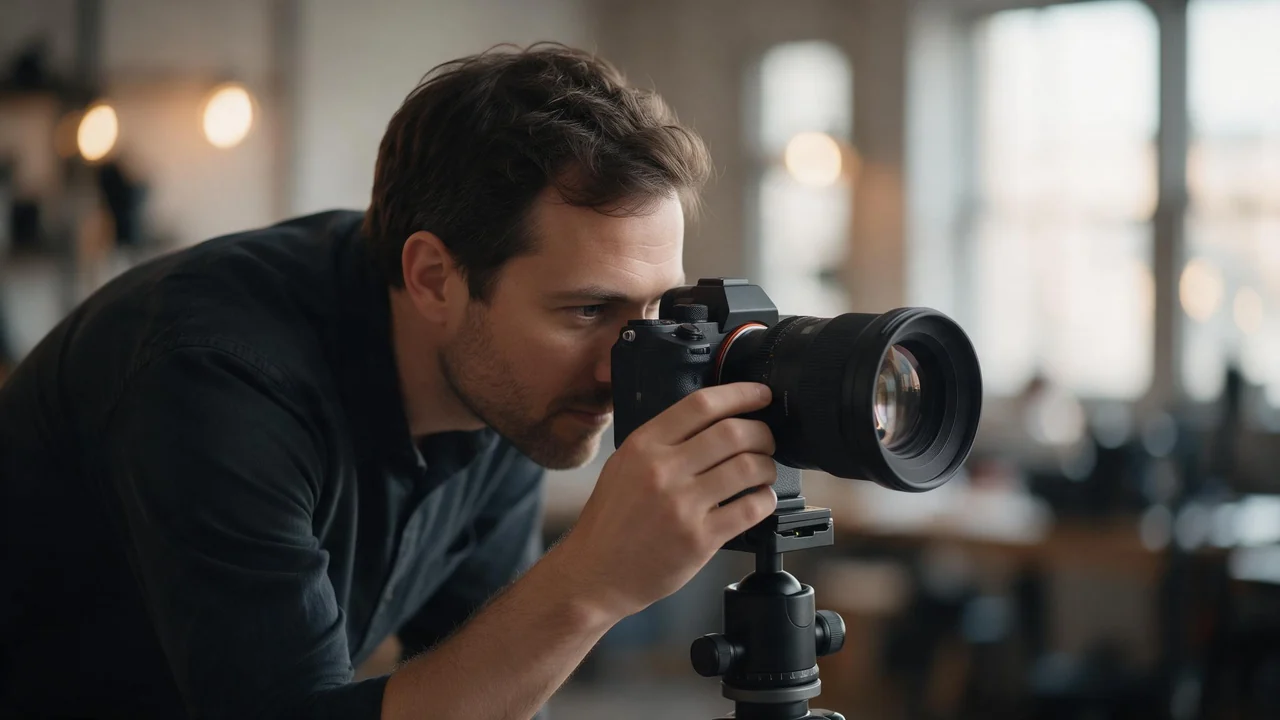
Most people write a character prompt, get a picture back and then notice that the background is either a smeared nothing or a loud room that drags the eye away from her face. Both are focus problems, and both are mostly fixed by a single sentence. These are lab notes: each one is a pair, the line before and the line after, and what you should expect to change. They describe tendencies of image models, not measurements, and any one render can ignore them, so read each pair as a bet and draft a few frames before you commit. Everything here is about adult, fictional characters you invented.
Before the first pair
Three words get used loosely, so pin them down. Focus is which part of the picture is crisp. Depth of field is how much of the scene around that point stays crisp: shallow is a thin slice, deep is most of the room. Separation is whether the subject stands out from what is behind her, and blur is only one way to get it. A text-to-image model has no aperture ring and no focus point to set; it has your sentence. Every note below is a way of writing that sentence so the intent survives. Plan the light first, as the lighting post does, and choose the room with the scenes post; this one is about what happens to the room once it is behind the person.
Note 1: Say which thing is sharp
Before:“a woman in a green dress in a busy café, shallow depth of field”. After:“a woman in her thirties in a green dress, her eyes in sharp focus, the café behind her dissolved into soft warm light”. What changes: the first line says things should be soft but never says where the crisp part lives, so the sharp plane can land on a chair or a cup. The second names the sharp thing and the soft thing. When you want the face to win, name the eyes; when you want a hand or a glass to win, name that, and the face softens instead (hands and gestures uses this on purpose).
Note 2: Subject first, room second
Before: one long sentence listing a bookshelf, a lamp, a plant, a record player, a window and a cat, with the woman and her outfit at the very end. After:the woman and her outfit first, then “behind her, a bookshelf and a lamp, both out of focus”. What changes:the room stops competing with her for the model’s attention, and two named things give the blur far fewer details to resolve than six. How much room to write is the business of the scenes post; this note is only about order, and it tends to help rather than guarantee.
Note 3: Lens words are flavour, not a dial
Before: “f/1.4” tacked on to the end of a prompt. After:“85mm portrait lens, wide aperture, the background melting into soft round highlights”. What changes:a number is a photographer’s setting, and a model has nothing to turn; at best it recognises the look that number is associated with. Describing the lens and what the blur does to the lights gives it something to draw. How strong the effect comes out still varies between model families and between renders. Name one lens, not three, as the poses and camera post advises.
Note 4: Separation without blur
Before:a dark-haired woman in a dark jacket against a dark wall, all of it in focus, “moody”. After:the same, plus “a thin warm rim of light along her hair, the wall a dim blue a few steps darker than her jacket”. What changes: the first picture has nothing to lift her off the wall, and no amount of blur helps when she and the wall are the same tone. Separation is light against dark, warm against cool or sharp against soft, and you need at least one of the three. Rim light and backlight are in the lighting post, and colour pairings that keep a figure apart from her wall are in colour palettes.
Note 5: When the background steals the frame
A background steals the frame when it holds something the eye reads faster than a face: a bright window right behind her head, a pattern of stripes or tiles, a shelf of small objects, a second face on a poster, a mirror showing another room. Before:“standing in front of a large bright window with the city behind her, shelves of books to the right”. After:“standing beside a window, its light falling on her from the side, the wall behind her plain and dim, one lamp softly out of focus”. What changes: the window moves from background to light source, which is a better job for it, and the busy shelf is gone. If renders keep putting a hot window behind her head, ask for it at her side and for a wall that is plain, dim and low in contrast. A mirror is the strongest competitor of all and has its own post: mirror and reflection shots.
Note 6: When the room is the point
Blur is not always the answer. Before:“a woman reading in an old library, 85mm, shallow depth of field”. After:“a woman reading in an old library, 35mm environmental portrait, the shelves sharp all the way back, she small in the frame”. What changes: a portrait-lens phrase melts the very room the picture is about, while a wider-lens phrase and an instruction to keep the shelves sharp holds it. She then has to read as a clear shape rather than a face, so say where she sits and let the light land on her.
Note 7: The frame decides how much room you get
How much background there is depends on the frame before you type a single focus word. A tall frame such as 2:3, 4:5 or 9:16 leaves little room at the sides, so one blur sentence is often enough. A wide frame such as 16:9 invites the whole room in, and the room needs managing. The aspect ratio guide lists the ratios. Two facts from the studio: when you attach reference images, automatic framing follows the first reference, so put the one whose crop you like first; and the cheapest image family has no aspect ratio choice at all, so a framing you care about means a different family. Open Fellowi Images and the picker shows what each family takes.
Note 8: Keeping the blur across a set
Before: five prompts, each describing the café in different words. After:one background sentence, with “softly out of focus” in it, pasted unchanged into all five. What changes: a soft background tends to hide small drift, a different lamp or a moved shelf, that a sharp room would show at once, so a set reads as one place. Reference images are what hold the person from frame to frame, and the cheapest family takes none; the room is held only by the words you paste, and it will still wander now and then. Keeping a character consistent has the method. If you later animate a favourite still in Fellowi Video, start from a frame whose background is already simple.
The lines that do not move
Every character here is an adult and drawn as one. Words that make a character read as a minor, and any stated age under the legal age, are refused before a single coin moves, and minors, age-play and non-consent are refused whatever the wording. The terms also forbid sexual or intimate imagery of a real, identifiable person, so a real person’s face does not belong in a reference, whatever the background. A blurred setting is a composition choice, never a way to make a scene harder to judge. What is legal and what is not has the fuller picture.
What it cannot do
It cannot give you an aperture: there is no focus point to set and no f-stop to turn, only words that nudge. It cannot promise the blur, or that the sharp plane lands on the eyes; sometimes the ear comes out crisp and the eye soft, and you draft again. It cannot change the background afterwards: the studio has no mask or brush, and an edit with the picture as a reference redraws the whole image, so the face may shift while the room improves. A generation that fails is refunded; a finished picture with the wrong thing in focus is not, so draft cheaply first, as drafting before you spend describes, and see the product page for what each render costs. Sometimes the oldest fix is the best one: crop closer until the background has nothing left to say.
Questions this post answers
How do I get a blurred background in AI character images?
Name what is sharp and what is soft in the same sentence, for example the eyes in sharp focus and the room behind her dissolved into soft light, and add a portrait lens word. It is a nudge, not a setting, so draft a few frames and keep the best.
Why does the background keep stealing attention from the character?
Usually a bright window, a pattern or a crowded shelf sits right behind her head. Move the window to her side as the light source, ask for a plain, dim wall behind her, and crop closer.
Can I blur the background of a finished AI image without changing the rest?
Not precisely. There is no mask or brush in the studio, and an edit with the picture as a reference redraws the whole image, so the face can shift while the room improves. A new draft with the blur written into the prompt is usually the faster fix.
Keep reading
NSFW AI Poses and Camera Angles: Where the Camera Stands Changes the Picture
Light and fabric are only half of a picture. Where the camera stands decides the rest: height, distance, lens, pose and gaze, as a photographer's shot list you can paste into a prompt.

How to Write NSFW AI Image Prompts That Actually Render
Name what should be in frame, never what should not. Six rewrites, and the one habit that makes a generator produce the exact thing you were trying to avoid.
NSFW AI Outfits and Fabrics: A Small Dictionary for Better Prompts
Fabric words do a lot of quiet work in an intimate AI picture. A six-entry dictionary with the phrase, the look and the usual failure, plus how to write one outfit sentence.