

Hands in Adult AI Character Art: Gestures That Render and the Ones That Break
By The Fellowi Team · · 6 min read
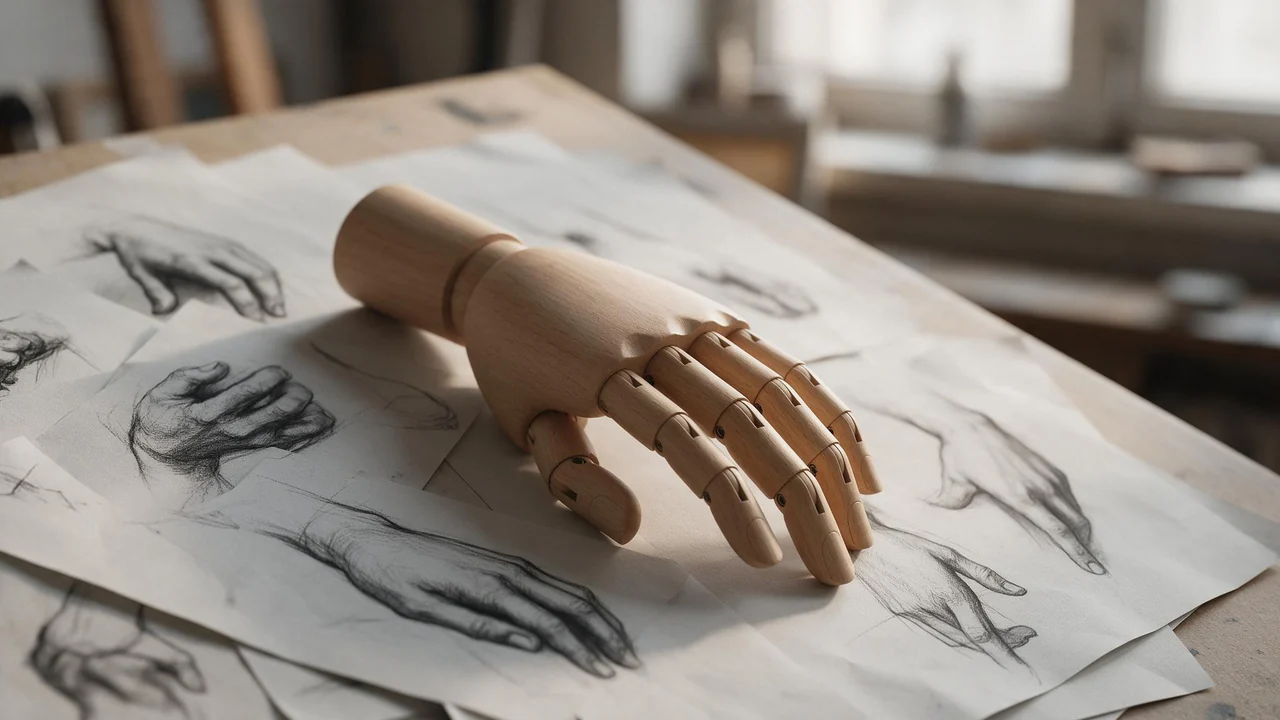
You can spend twenty minutes on a character’s face, light and outfit, and the picture is still ruined by one detail in the lower corner: a hand with six fingers, or with four that have quietly fused into a paddle. Hands are the oldest complaint about image models, and they have improved, but they still fail more than any other part of a figure. Below are the five symptoms that come up most, each with why it happens and the fix that usually works. Everything here is about adult, fictional characters you invented.
Why hands are hard
A model does not count. It has seen millions of hands from every angle, gripping, overlapping, half hidden, and it draws something that looks like those hands in general. A face is one shape seen mostly from the front. A hand is five jointed parts that cover each other differently in every pose, so the more the fingers spread or cross, the more room there is to draw one too many. The fixes below all work the same way: they give the model fewer fingers to resolve, or a clearer reason for where each one goes.
Symptom 1: an extra finger
What you see: six fingers, or a thumb on the wrong side. Why: fingers spread wide or fanned out in the air, with nothing to do. The fix:give the hand a job. “Her right hand wrapped around a coffee cup” or “his hand resting flat on the table” tells the model where every finger goes. A hand with a task is drawn as one shape; a hand without one is drawn as five guesses.
Symptom 2: fingers fused together
What you see: a smooth mitten where four fingers should be. Why: a hand small in the frame, in soft or low light, with too little detail to separate the fingers. The fix:either bring the hand closer and light it (“hand in the foreground, side light on the knuckles”), or let it go out of focus deliberately (“shallow depth of field, hands soft in the background”). The muddle happens in between: a hand big enough to notice and too small to draw. Lighting for character images covers side light in detail.
Symptom 3: a hand melting into an object
What you see: a wine glass whose stem becomes a finger, a phone that grows out of a palm. Why: two thin shapes meeting with no clear edge. The fix:name how the hand holds the thing. “Holding a wine glass by the stem between two fingers” renders better than “with a wine glass”. Prefer chunky objects to thin ones: a mug, a book, a railing. And keep to one object per hand; a hand holding a glass and a phone and a bag strap is asking for trouble. Jewelry and accessories has the same rule for rings and bracelets.
Symptom 4: two hands that do not match
What you see:a left hand that is clearly someone else’s, a different size, skin tone or nail colour. Why: both hands in full view doing different things, each drawn separately. The fix: show fewer hands. One in view and one in a pocket, behind the back, in the hair or out of the frame is a calmer picture anyway. If both must show, give them the same job: both around a mug, both on a balcony railing. And write the nails once, in the character line you reuse for every prompt, so the colour does not change between them.
Symptom 5: two characters, hands everywhere
What you see: a frame with two adults where nobody can tell whose hand is whose, and one arm seems to come from nowhere. Why: four hands in contact, overlapping, the hardest case there is. The fix:one point of contact, said plainly: “her hand resting on his shoulder”, “fingers loosely laced, seen from the side”. Keep the other hands simple or out of view. Any touch between characters should read as mutual and wanted; a gesture of holding someone down or holding someone back is not a craft problem to solve here, it is a refusal (see below). Poses and camera angles shows how to frame a pair.
Gestures that carry a picture
A hand is also where a picture gets its mood, so it is worth choosing one on purpose rather than leaving the model to guess. Fingers pushing hair back from the face reads as relaxed. A hand on the hip reads as confident. Chin resting on the back of a hand reads as thoughtful. A palm flat against a window reads as waiting. Each of these also happens to be a hand with a job, which is why they render well. Pair the gesture with the face: facial expressions explains how the two tell one story.
Keeping hands consistent across a set
Hands carry a character as much as a face does: the nail colour, a ring that is always on the same finger, a tattoo on the wrist. Write them into the character line you paste into every prompt, and attach your best picture as a reference image, so the details carry over (the cheapest image family takes no references, so pick one that does). Expect the ring to wander between fingers now and then. Keeping a character consistent has the method. If you animate a still in Fellowi Video, hands in motion drift more than hands at rest, so pick a still where the hands are already simple.
The lines that do not move
Every character here is an adult and drawn as one; small, childlike hands are not a style to reach for. Words that make a character read as a minor, and any stated age under the legal age, are refused before a single coin moves, and minors, age-play and non-consent are refused whatever the wording, which includes a gesture that restrains or forces. The terms also forbid sexual or intimate imagery of a real, identifiable person, so a real face or a real person’s distinctive tattoo does not belong in a reference. What is legal and what is not has the fuller picture.
What it cannot do
It cannot promise five fingers on every hand in every render; the fixes above make a good hand more likely, not certain. There is no brush to repaint a single hand: an edit with the picture as a reference redraws the whole image, so the hand may improve while the face shifts. It cannot hold an exact ring design or a hand pose identical across a set. A generation that fails is refunded; a finished picture with a sixth finger is not, so draft cheaply first, as drafting before you spend describes, and see the product page for what each render costs. Sometimes the honest fix is the oldest one in photography: crop the hand out, and let the picture be about the face.
Questions this post answers
Why do AI images give characters six fingers?
A model draws what hands usually look like, not by counting fingers, and spread or overlapping fingers are where that fails most. Give the hand a simple job, keep the fingers together or partly hidden, and generate a few drafts to choose from.
Can I fix just one hand in an AI image without changing the rest?
Not precisely. There is no brush to repaint a single area: an edit with the image as a reference redraws the whole picture, so the hand may improve while something else shifts. Often a new draft or a tighter crop is the faster fix.
Which hand gestures render most reliably in AI character art?
Hands with one clear task: holding a cup, resting flat on a surface, tucked into a pocket or into hair, gripping a railing. Open, spread or interlocked fingers, and two hands touching each other, break most often.
Keep reading
NSFW AI Art Styles: A Guided Tour from Photoreal to Pin-Up
Five looks for adult AI images, the vocabulary that moves a model toward each, one suggestive example prompt apiece, and how to keep a whole set in one style.

NSFW AI Generation Glossary: Every Term Before Your First Picture
You can start without reading a manual. These are the words on the controls around the prompt field, each explained in a breath, with the article that goes into detail.
NSFW AI Outfits and Fabrics: A Small Dictionary for Better Prompts
Fabric words do a lot of quiet work in an intimate AI picture. A six-entry dictionary with the phrase, the look and the usual failure, plus how to write one outfit sentence.