

Mirror Shots in Adult AI Character Art: Glass, Steam and the Reflection That Lies
By The Fellowi Team · · 7 min read
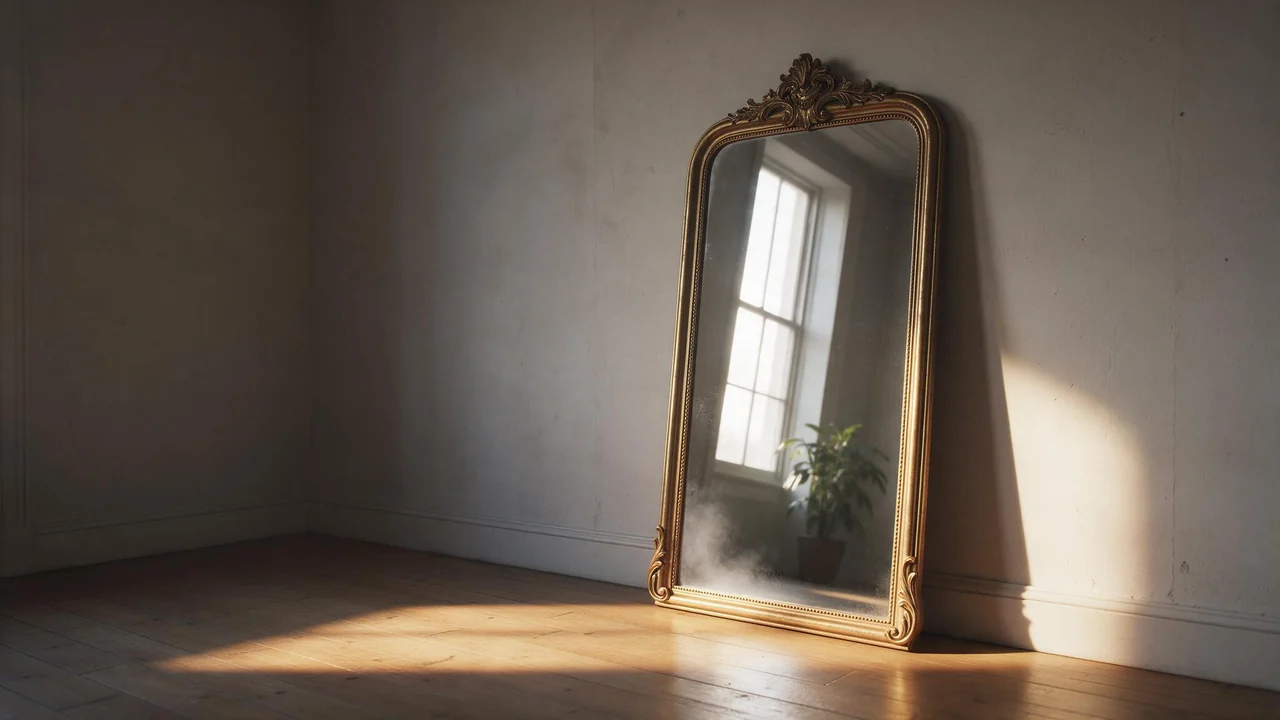
A mirror is the oldest trick in portrait photography. It shows two sides of a person in one frame, it puts the viewer inside the room, and it gives a character something to do with their eyes. For an image model it is also a trap, because a mirror asks for two pictures that must agree with each other, and the model only half understands that they should.
What follows are five setups with glass in them, each with a sentence that works in Fellowi Images and the way it usually breaks. Everything here is about adult, fictional characters you made up; the lines at the end are not optional.
The cheat that saves most mirror shots
Before the setups, the one idea that fixes half of them: show only the reflection. When the frame holds a person and their reflection, the model draws two figures and rarely makes them match. When the person stands outside the frame and the mirror fills it, there is only one figure to get right, and it still reads as a mirror shot because of the frame, the edge of the glass, the room behind.
Write it outright: “we see her only in the mirror, the real person is outside the frame”. It is a rule to break on purpose, not by accident.
1. The phone selfie in a full-length mirror
“Mirror selfie of a woman in her thirties in a hallway, full-length mirror, phone held low at chest height in her right hand, face fully visible in the mirror, soft daylight from a door on the left.”
Where it breaks: the phone. Leave its position out and models put it in front of the face, because that is where it sits in most real mirror selfies. Name the hand and the height. Expect the phone itself to come out vague; a phone with no visible brand and a plain case is the one you want anyway. A tall frame suits a full-length mirror, so pick a vertical aspect ratio before you generate.
2. Over the shoulder, at the vanity
“Seen from behind his left shoulder, a man sitting at a vanity table, his face in the round mirror in front of him, a warm bulb beside the mirror, the back of his head soft and out of focus.”
Where it breaks: the reflection disagrees with the back. Hair is parted on the wrong side, a hand appears in the mirror that the body is not using, sometimes a third arm. Keep the real figure out of focus and partly cropped, so the model spends its detail on the face in the glass, and keep the hands in the reflection still and simple, resting on the table. If the mirror version comes out right and the back does not, crop the back away.
3. Steam on the glass
“Bathroom mirror covered in steam, one clear streak wiped across it at eye height, her face visible only through the clear streak, soft diffused light, droplets on the glass.”
Where it breaks: the steam is everywhere or nowhere. A single wiped streak gives the model a shape to follow, and it does more for the mood than any amount of skin. Steam also hides small errors, which is a quiet reason it works so well. The light that suits it is soft and from above; the lighting recipes have the details.
4. A window at night
“Night, a woman standing at a tall apartment window, her faint reflection in the glass, city lights visible through the reflection, a single lamp behind her in the room.”
Where it breaks:a window is both a mirror and a view, and models pick one. Say “faint” for the reflection and name what is seen through it. The lamp in the room matters: a dark room against a bright city gives no reflection at all, which is how real glass behaves too. This one sits well in a wide frame, with the figure off centre.
5. Wet floors and puddles
“A wet tiled floor after rain on a rooftop terrace, a man in a long coat standing at the edge, his reflection upside down in the puddle at his feet, overcast blue evening light.”
Where it breaks:the reflection is the right way up, or it belongs to a different person. “Upside down” and “at his feet” anchor it. A puddle is forgiving: ripples hide a mismatch, so “rippled reflection” is a fair fix when a clean one will not come.
Lettering, logos and the reversed world
Anything with letters on it reflects backwards in a real mirror, and image models do not know whether to reverse it or not. A shirt with a slogan, a sign on a door, a perfume bottle with a label: all of them come back as nonsense on one side of the glass. Write “plain” on everything that might carry text, and keep brand names out of the prompt altogether; a recognisable logo is not ours to put in your picture.
One character, many mirrors
A mirror set works best as a series: the hallway, then the vanity, then the window, the same character in each. Paste the same short description of the character into every prompt and attach your best picture of them as a reference image (the cheapest image family takes no references, so pick one that does), and keeping a character consistent explains the method. A reflection is a second chance for the face to drift, so check it in every picture, not only the figure in front of the glass.
The lines that do not move
Every character here is an adult, written as one. Words that make a character read as a minor, and any stated age under the legal age, are refused before a single coin moves, and minors, age-play and non-consent are refused whatever the wording. A mirror selfie is also the shape most likely to be built from a real person’s photo, so plainly: the terms forbid sexual or intimate imagery of any real, identifiable person, and an upload of someone else needs their permission and the rights to use it. Your characters are invented; keep them that way. The fuller picture is in what is legal and what is not.
What a mirror cannot do
It cannot make the model understand optics. Even with every sentence above, a share of mirror renders come back with a reflection that is slightly wrong: a hand in the wrong place, an earring on the wrong ear, a room that does not quite continue in the glass. Some of that is fixable by a reroll, some by cropping, and some is simply the cost of a hard subject. A generation that fails is refunded; a finished picture with a wrong reflection is not, so draft cheaply first, as drafting before you spend describes, and see the product page for what each render costs. Two people and their two reflections in one frame is the hardest version of all; start with one.
Questions this post answers
Why does the reflection in an AI mirror shot not match the person?
The model draws the person and the reflection as two separate figures and does not check that they agree, so the pose, the hair or the hands differ. Simplify: show only the reflection with the person outside the frame, or keep the real figure small and the mirror large.
How do I stop the phone hiding the face in an AI mirror selfie?
Say where the phone is: held low at chest height in one hand, the face fully visible in the mirror. Without a position, models tend to put the phone right in front of the face, where most real mirror selfies have it.
Can I make a mirror selfie from a real person's photo?
Not an intimate one: the terms forbid sexual or intimate imagery of any real, identifiable person. Mirror shots here are for original, fictional adult characters, held across a set by reference images of the character you created.
Keep reading

NSFW AI Generation Glossary: Every Term Before Your First Picture
You can start without reading a manual. These are the words on the controls around the prompt field, each explained in a breath, with the article that goes into detail.
NSFW AI Image Series: Telling a Story Across Six Frames
One good picture is a moment. Six that belong together are a story. A shot list from establishing frame to quiet close, with the settings that keep it one character.
Jewelry and Accessories for Adult AI Character Art: A Stylist's Kit List
A stylist packs the whole kit and puts one piece on. What to pack, how metal meets the palette, the signature piece that holds a character across a set, and why earrings come out mismatched.