

NSFW AI Scenes and Settings: Dress the Room Before You Light It
By The Fellowi Team · · 7 min read
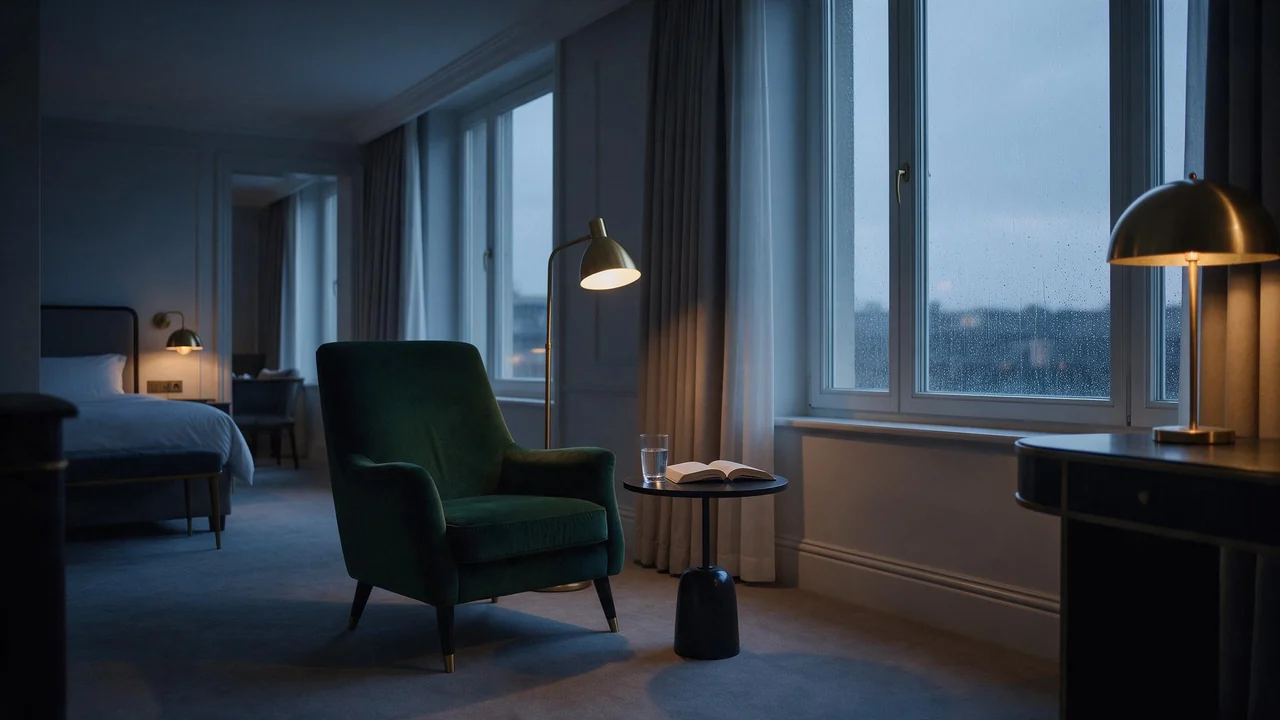
Three earlier posts dealt with light, fabric and the camera. All three assume something nobody wrote down: a room. On a real shoot the set designer builds it the day before, and by the time the photographer arrives the armchair is placed, the lamp is on and the curtain hangs just so. In character generation you are the set designer too, and when you skip the job the model hands you its default set: a vague bedroom, beige walls, a bed in the middle of nowhere. So let us walk the rooms the way a designer walks a set before call time.
The room is a character
A setting says who someone is before her face does. A rumpled hotel suite says travel and a night away. A loft full of plants and canvases says she lives here and makes things. A cabin with a fire says winter, distance, no hurry. Pick the room for the story you want the picture to tell, then make everything else in the prompt agree with it: an outfit that belongs in that room, light that comes from its windows and its lamps.
Four rooms, dressed
- The hotel suite at dusk.“a hotel suite at dusk, velvet armchair, brass floor lamp, rain on tall windows, city lights below”. Moody and a little cinematic. The rain does more work than any adjective.
- The artist’s loft in the morning.“a sunlit loft, white brick walls, potted plants, an easel with an unfinished canvas, linen on a low daybed”. Bright, lived in, unhurried.
- The cabin in winter.“a wooden cabin, stone fireplace with a low fire, wool blanket on a leather sofa, snow outside the window”. Warm against cold, which is the whole point of it.
- The rooftop after rain.“a city rooftop terrace at night after rain, wet tiles reflecting neon, string lights, a single wicker chair”. Outdoors without daylight, which keeps the mood private.
Each recipe has the same skeleton: a place, a time, three or four objects, and one thing happening outside the window. Copy the skeleton, not the words.
Props: three, not thirty
Props are where a set feels real or feels like a catalogue. Choose objects with a reason to be there: a glass of water on the side table, a book left open face down, a robe over the back of a chair, a record player. Three props read as a life; ten read as clutter, and the model starts melting them into odd shapes. Props also give hands something to hold, which the poses post explains is the cheapest fix for hands.
Time of day and weather
A room at seven in the morning and the same room at midnight are two different sets. Write the hour as well as the place: “early morning”, “golden hour”, “blue hour after sunset”, “late night”. Weather is the cheapest set dressing there is: rain on glass, fog over the street, snow on the sill, a summer storm. One weather phrase changes the whole palette, and it pairs naturally with the recipes in the lighting post.
How much background to write
Less than you think when the person is the subject: one sentence for the room, plus “shallow depth of field” to soften it. More when the room is part of the story: two or three sentences, with the important props named. Write the person and the outfit first and the room after, unless the room is the point, so the sentence about her is never buried under furniture.
Fit the room to the frame
A wide room wants a wide frame: 16:9 or 3:2 lets the window, the lamp and the armchair all fit. A doorway, a staircase or a tall window wants a tall one, 2:3 or 4:5. A 9:16 story frame has space for very little set, so pick one strong element, a window or a mirror, and let the rest go. The aspect ratio guide lists every shape.
Keeping the same room across a series
For a series, write the room once as a single sentence and paste it into every prompt unchanged. Then attach your best picture as a reference: it is there to hold the person, and it carries some of the look along with her, but small furnishings drift from one generation to the next, so the written room sentence does the heavier lifting. Change one thing at a time, as the consistency guide recommends. Reference images are not offered on every model family in Fellowi Images, so check the studio before you plan a series around them. And a frame where the room itself could move, rain running down the glass or a fire flickering, is a good candidate for Fellowi Video.
The lines that do not move
A set can hold anything an adult life contains, and nothing that it does not. Everyone in it is a clearly adult person of legal age. A school, a classroom or a playground has no place next to nudity, here or anywhere on Fellowi, and any prompt that refers to a minor is refused before a coin moves. Props and decor are never used to make an adult look like a child. Age-play and non-consent are forbidden by the terms, and no real person’s face goes into the room. The long version is in the legal guide.
What a set sentence cannot do
It describes a room; it does not build one. There is no floor plan: you cannot put the lamp exactly a hand’s width left of the chair, and the same room sentence will furnish itself a little differently each time. Lettering on a sign or a book cover often comes out warped rather than readable. Too many props melt into each other. And the room changes nothing about what is allowed or how a picture is billed: prices and quality levels are on the product page.
Start with one room in Fellowi Images: write it once, generate it empty, and only then put someone in it. If the empty room already tells a story, the picture with a person in it will too.
Questions this post answers
How much of the background should I describe?
One sentence when the person is the subject, two or three when the room is part of the story. Name the place, two or three props and the light, and let a shallow depth of field soften the rest.
Why does the room change between pictures in a series?
A reference image is there mainly to hold a person, and small furnishings drift from one generation to the next. Paste the same room sentence into every prompt and change one thing at a time to keep the drift small.
Are there settings that are refused?
Yes. Any prompt that refers to a minor is refused before a coin moves, a school, classroom or playground never sits next to nudity, and the terms forbid age-play and non-consent. Characters are always adults of legal age.
Keep reading
NSFW AI Image Series: Telling a Story Across Six Frames
One good picture is a moment. Six that belong together are a story. A shot list from establishing frame to quiet close, with the settings that keep it one character.

How to Write NSFW AI Image Prompts That Actually Render
Name what should be in frame, never what should not. Six rewrites, and the one habit that makes a generator produce the exact thing you were trying to avoid.
NSFW AI Boudoir Lighting: Five Recipes You Can Paste Into a Prompt
Light is the part of an intimate AI picture most people leave to chance. Five recipe cards, one sentence each, plus how to keep a whole set under the same light.