

NSFW AI Halloween Costumes: Witches, Vampires and Masks That Render
By The Fellowi Team · · 8 min read
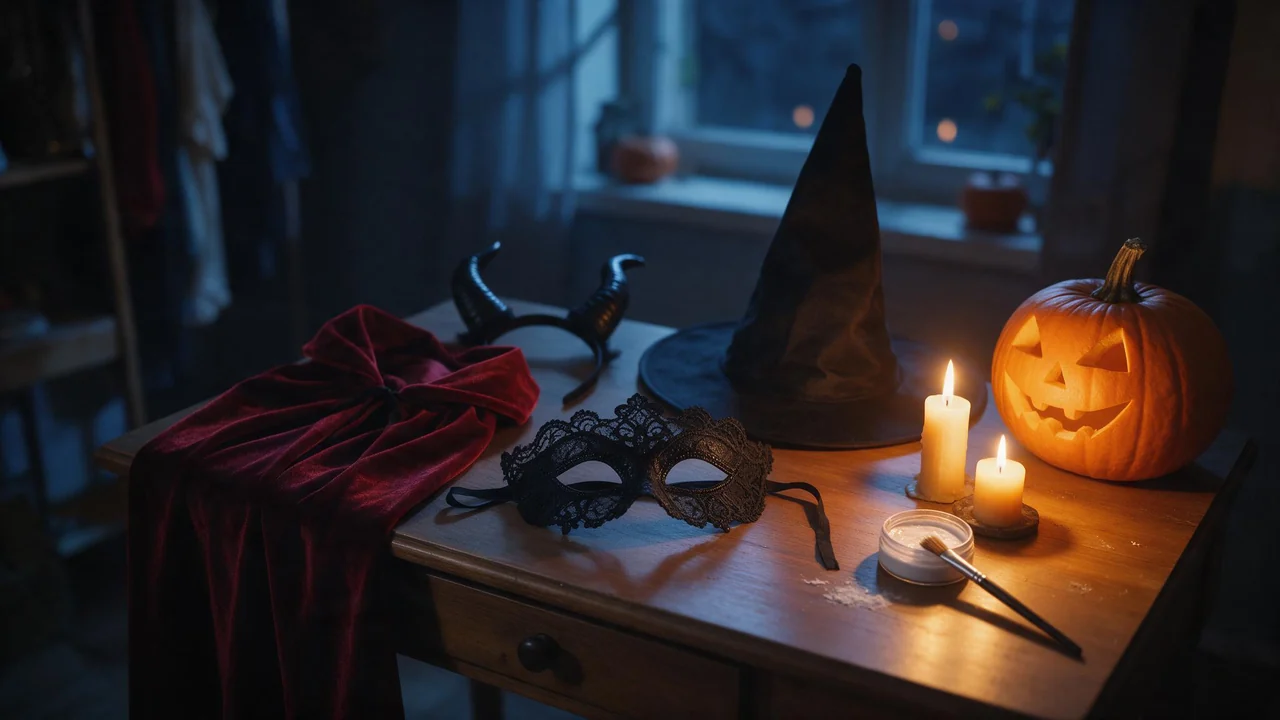
Once a year your character gets to be someone else for a night. A witch, a vampire, a fallen angel with one wing out of place. October is when the costume prompts start, and it is also when a carefully built character disappears under a hat brim and a cape and comes back as a stranger. These are dresser’s notes: costume by costume, the words that render, the ones that swallow her, and the light that makes it spooky without making her look ill. Every character here is an invented adult, and the costumes are costumes for grown women and men. The lines that are not negotiable come at the end, and they are short.
Three lines, in this order
A costume is something she wears, not something she becomes, and the prompt should read that way. Write it in three parts and never let them swap places:
- Who she is: her usual description line, pasted unchanged. If you do not have one yet, write it first; the one-page character bible is the template.
- What she is wearing tonight:the costume, as materials and pieces. “Dressed as a witch” hands the whole picture to the model’s idea of a witch. “A wide-brimmed black felt hat, a long black crushed-velvet dress, a silver crescent pendant” keeps the decision with you.
- The scene: place, light, pose and camera, as in any other picture.
With a reference image attached, use the short form of her line (the signature detail and anything a picture cannot show) and let the costume line do the talking.
The witch
The most requested costume, and the one with the widest brim problem. A big hat throws the eyes into shadow and the model fills the shadow with whatever face it likes. Two fixes: tilt it (“the hat tipped back off her forehead”) or light under it with a candle she is holding. Words that render: black felt, crushed velvet, a lace-up bodice, a long cloak with a hood down, a silver ring on every finger, a twig broom, a brass lantern, dried herbs hung from a beam. A green face belongs to a cartoon; leave her skin as it is and put the green in the potion glass.
The vampire
Choose one marker. A high stiff collar, a red-lined cape, pale skin, red eyes, fangs and a goblet together read as a costume shop, which is the warning in designing an original fantasy character, and for one night that may be exactly what you want, so keep it to two. Fangs are the riskiest: a parted mouth with fangs often comes out with too many teeth. A closed smile and one fang just showing at the corner renders far more often than a full grin. Dark red velvet, black silk, a cameo brooch at the throat and candlelight do more for a vampire than any amount of blood, and leaving the blood out keeps the picture a portrait instead of a horror still.
Fallen angel, devil horns and wings
Wings and horns are scale problems. “Wings” alone often come out the size of the frame and push her into a corner, so give them a size and a pose: “black feathered wings folded close behind her shoulders, the tips reaching her knees”. Horns want a position and a length: “two small curved black horns at the hairline, half hidden in her hair”. Without the hairline they grow from the middle of the forehead, and without a length they turn into antlers. A cracked halo, one torn feather on the floor or a single gold thread in a black dress tells the fallen-angel story without another prop.
Masquerade masks
The mask is where most costume pictures break, because the model does not know where the face ends and the mask begins. The result is a mask printed onto the skin, or lace that grows into the eyebrows. Name it as an object:
- A material: black lace, gilded papier-mache, silver filigree, velvet.
- An edge:“covering only the eyes and the bridge of the nose”, so the cheeks and mouth stay hers.
- A way it is held on:“a black satin ribbon tied behind her head”. The ribbon tells the model the mask is separate from her.
Or skip the problem entirely: a mask on a handle, held beside her face, shows the costume and the face in the same frame. That one is our first choice for a character people have to recognise.
Gothic lace, capes and gloves
Gothic dressing is fabric work, so the fabric vocabularyapplies as it is: lace over a solid lining, velvet that takes light at its folds, a high-neck lace collar, long black satin gloves. Capes are the trap. A black cape against a dark room becomes one black shape and her silhouette is gone. Line it in a colour (“a black cape lined in deep red silk, thrown back over one shoulder”), keep it open at the front, and put a rim of light along her edge. A choker, a long chain or old silver rings finish the look; the jewelry guide has the words that hold their shape.
Face paint, without prosthetics
Paint is the costume that most often erases a character, because it covers exactly the features that identify her. Keep it partial and graphic: a half-face skull drawn in white and black on one side only, silver stars along one cheekbone, a black line from the lower lid down the cheek like a painted tear. Say “face paint” and say where it stops. “Zombie” and “rotting” pull the model toward horror makeup and wounds, and fantasy details work better as paint and jewellery than as anything that looks glued on: pointed ears are still fine, but say “delicate pointed ears” and give her an adult face around them.
Keeping her recognisable in costume
The costume can change everything except four things:
- Her signature detail stays visible. If her mark is a scar through the left eyebrow, the mask goes below it or on the other side. If it is her hair, the hat sits back and the hair falls out from under it.
- Her hair keeps its length and colour. A wig is a different character.
- A reference image of her is attached.A render from an ordinary day, not a costume shot, so the model learns her face rather than last year’s mask. How references work is in keeping one character consistent.
- Her description line comes first, unchanged, every time.
Light that is spooky but flattering
Horror films light faces from below, and that is why a jack-o’-lantern under the chin makes anyone look like a villain. Keep the pumpkins as practical lights in the background and put the key light on her from the side and slightly above: a candelabra at shoulder height, warm, with a cool blue fill from a window behind. The mix of orange and blue reads as an October night and still flatters skin. A rim light separates a black costume from a black room, and a little fog or candle smoke behind her adds depth without hiding anything. The full set of setups is in the lighting guide, and the orange, purple and black of the season are covered in colour palettes.
What breaks, and the one-line fixes
- Mask merged with the face: material, edge and ribbon, or a mask on a handle.
- Cape swallowed the silhouette: a coloured lining, open at the front, a rim light.
- Hat brim hid the eyes: tip it back or light under it.
- Horns in the wrong place:say “at the hairline” and give a length.
- Too many teeth: closed smile, one fang.
- Prop pile-up: one prop she holds, the rest in the background or gone.
- She became someone else: her line first, a non-costume reference, her signature detail uncovered.
The lines that are not up to you
Every character is a clearly legal-age adult and fictional, in costume as much as out of it. Halloween is not an exception and neither is the backstory you give it. School uniforms, childlike costumes, anything “little” or “young”, and age-play are not costumes this series helps with, and the product enforces it in code: before a coin is spent, the prompt is checked for a stated age under 18, words that mark a character as a minor (“schoolgirl” is one of them) and a school setting paired with youth words, and those prompts are refused outright. Nothing non-consensual either: a costume is something she chose to wear.
A costume of a real person, a celebrity or a named character from a film or game is not ours to make. Our terms forbid sexual or intimate imagery of a real, identifiable person and output that infringes another work, so dress her as a witch, not as a particular witch. Where you live may have its own rules on top; they are covered in what is and is not legal.
What a costume prompt cannot do
It cannot add a costume to a finished picture without touching her. An edit with a reference redraws the whole image, so the cape you added can move her hair and soften her jaw; check the face before you keep the result. A costume heavy enough to change her will change her, whatever the prompt says. Failed generations are refunded and a finished render that simply is not her is not, so cast the costume on a few cheap drafts first, as in draft first, spend later, and check the costs on the product page. When the line is ready, open the image studio, paste her line, then the costume, then the candlelight. If a friend who knows her can still pick her out under the mask, the costume worked.
Questions this post answers
How do I keep my character recognisable in a Halloween costume?
Paste her usual description line first and the costume after it, keep her signature detail outside the costume, and attach a reference image of her from an earlier render. A mask or face paint should cover part of the face, never the part that makes her her.
Why does the mask keep melting into the face?
Because the prompt names a mask but not an object. Give it a material, an edge and a way it is held on, such as a black lace eye mask with a ribbon tied behind the head, or have her hold it on a handle beside her face.
Are some Halloween costumes refused?
Yes. Every character must be a clearly legal-age adult, so school uniforms, childlike costumes and age-play are refused, and the word schoolgirl is blocked before any coin moves. Nothing non-consensual and no real person's likeness either.
Keep reading

How to Write NSFW AI Image Prompts That Actually Render
Name what should be in frame, never what should not. Six rewrites, and the one habit that makes a generator produce the exact thing you were trying to avoid.
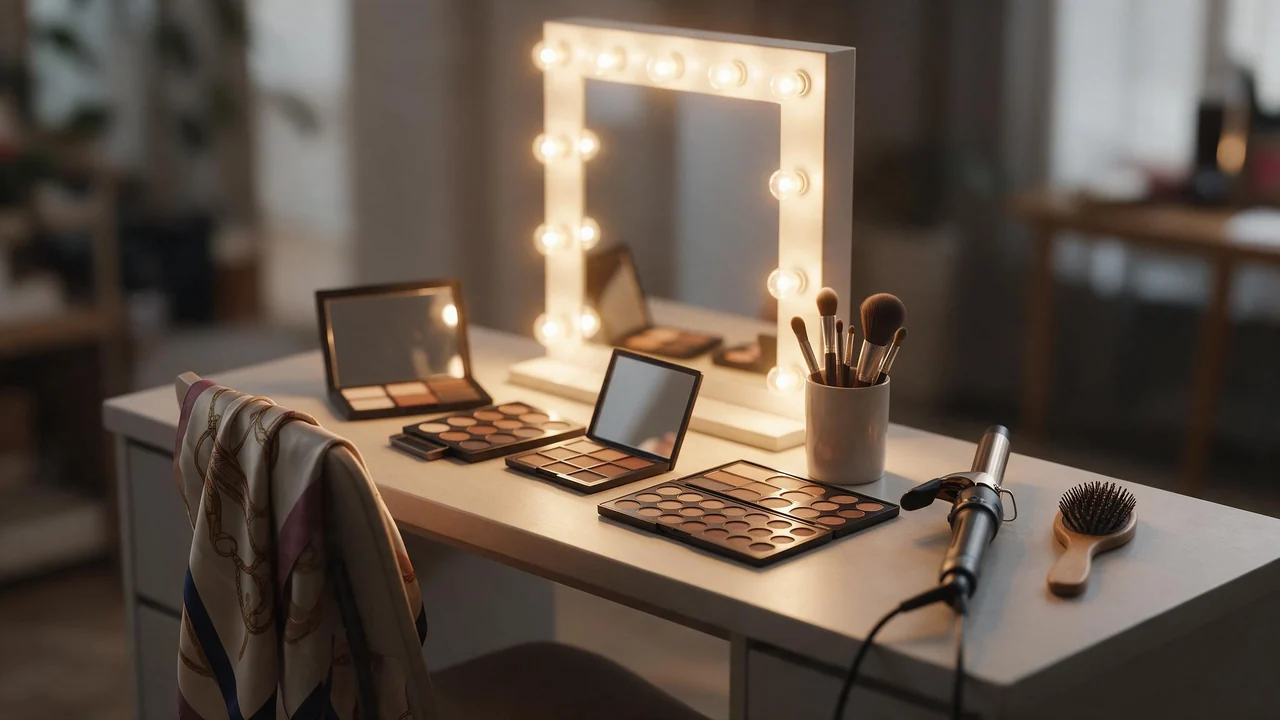
Hair and Makeup Prompts for NSFW AI Characters: Words That Render
A stylist works in order: hair, skin, eyes, lips, then a photo for continuity. The same order makes a better prompt. A prep sheet of the words that render and the ones that do nothing.
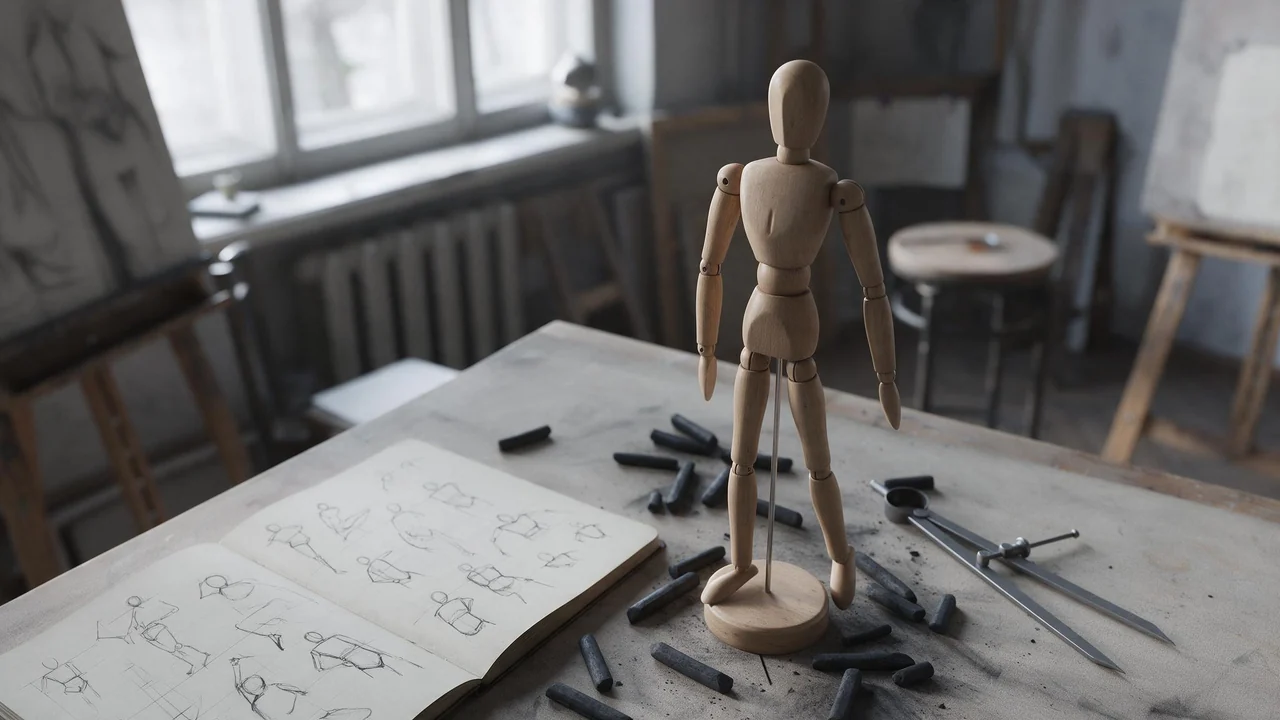
Body Types in NSFW AI Character Generation: Describing Real Adult Bodies
Leave the body unsaid and the model hands you the same one every time. Seven notes in the figure-drawing tradition: build, proportion, height, skin and the marks of an adult life.