

Hair and Makeup Prompts for NSFW AI Characters: Words That Render
By The Fellowi Team · · 6 min read
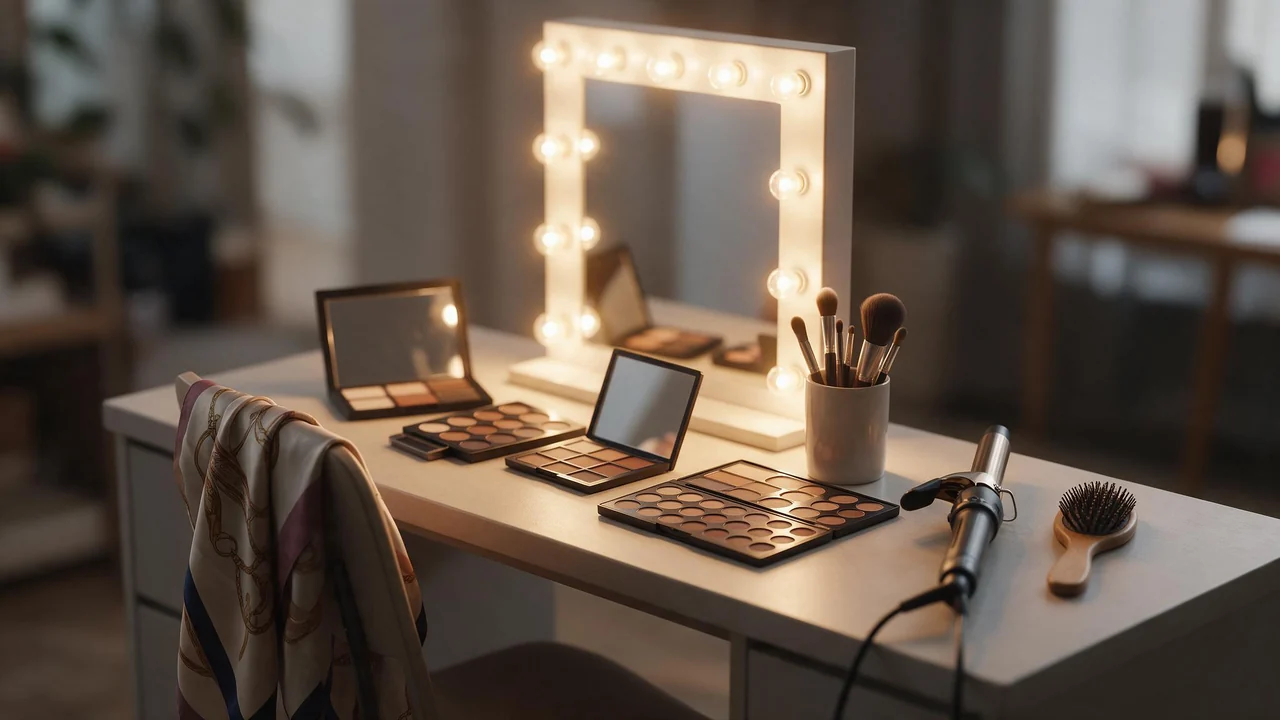
On a real shoot, nobody walks onto the set with their hair and makeup undecided. A session stylist builds the look in the chair, in a fixed order, and writes it down so the second day matches the first. A good character prompt can work the same way. This is the prep sheet: the words that change a portrait in Fellowi Images, in the order a stylist would use them, and the ones that only take up space.
Hair: length, shape, texture, in that order
“Beautiful hair” tells the model nothing. Three facts do:
- Length, against the body.“Chin-length”, “shoulder-length”, “mid-back”. A measurement against the body renders far more reliably than “long” or “short”.
- Shape. A blunt bob, a shag with curtain bangs, a sleek low bun, a high ponytail, a side part with one side tucked behind the ear. Name the cut the way you would to a hairdresser.
- Texture and finish. Pin-straight, loose waves, tight coils, wet-look, glossy, matte, a little frizz at the crown. Texture is what makes hair look like hair rather than a helmet.
Then colour, and be specific: “copper red”, “ash blonde with darker roots”, “blue-black”. And let the hair react to the scene: wind, dampness after a shower, a few strands across the face. Those small details are what make a picture feel taken rather than assembled. Light changes how all of it reads, which is the whole subject of the lighting guide.
Skin: the finish, not the flaws
Image models drift towards smooth, poreless skin that reads as plastic. The fix is to ask for texture on purpose: “natural skin texture”, “visible pores”, “freckles across the nose”, “a light sheen on the cheekbones”. Then pick one finish and stay with it: dewy, satin or matte. Dewy skin with matte lips is a choice; dewy, matte and glowing in one prompt is three choices fighting.
Eyes: one idea, not a palette
Eye makeup works best as one clear idea. “A smoky eye in charcoal”, “a sharp black winged liner”, “bare lids with mascara only”, “a wash of bronze shimmer on the lid”. Lashes and brows are worth a word each (“full, brushed-up brows”), because they frame the expression. The face itself, what the eyes are doing, is a different job, and it has its own guide: facial expressions.
Lips: colour plus finish
A colour alone is half an instruction. Add the finish and the lips stop looking painted on: “deep berry, satin”, “classic red, matte”, “sheer nude gloss”, “a blurred, just-bitten stain”. Brand names and shade numbers do little: the model does not know a brand's shade card, so describe what you would see instead.
Match the styling to the scene
The most common mistake is not a wrong word but a wrong pairing. A full evening face in a sunlit morning bedroom looks staged; messy, slept-in hair under a dramatic studio key light looks like an accident. Decide what the moment is first, then style for it: the morning after wants bare skin and undone hair, a night out wants the liner and the shine. The fabric guide makes the same argument for clothes, and the two lists work well together.
Continuity: keep the look across a series
Every generation reads the prompt fresh, so a hairstyle described the same way still comes back slightly different each time. Two habits fix most of it:
- Freeze the sheet. Keep the hair and makeup lines word for word in a note and paste them unchanged into every prompt. Change the scene, never the styling line, unless the story calls for it.
- Use your best picture as a reference. Attach it first; the frame follows the first reference, and the look carries over far better than from words alone. Each reference adds to the price, which is listed on the product page. The full method is in keeping a character consistent.
If you switch on Enhance prompt quality, the rewrite may embellish your styling with details of its own. Pick a style that fits (Photographic or Realistic for a photo look, Anime for drawn work) and check that your exact hair and makeup words survived the rewrite.
What still breaks
- Fine strands. Flyaways, wisps and very fine curls can melt into a soft blur, especially against a busy background.
- Hands in hair. Fingers threaded through hair are one of the hardest things for an image model; expect merged fingers and try a few times, or choose a pose with the hands elsewhere.
- Exact repeats. Even with a reference, a braid will not repeat strand for strand, and a complicated updo will vary. Simpler styles hold better.
- Tiny details. A specific nail design, a small tattoo, lettering on a hair clip: often wrong or missing. Leave them out, or add them later in an editor.
- Motion. When you animate a still into a short clip on Fellowi Video, hair is the part most likely to move strangely. Keep the movement small.
The lines that do not move
Every character is an adult, and the styling has to say so too. A look built to make an adult read as a child (school-uniform styling, childish accessories, anything that leans on looking young) is against our terms, whatever the prompt claims about age, and a prompt that refers to a minor is stopped before any coin moves. Age-play and non-consent are refused the same way. And no look may copy a real, identifiable person: a celebrity's signature hair and makeup on an invented face is still an attempt at their likeness. The rules in full, and why they exist, are in what the law and our terms allow.
Questions this post answers
Why does my character's hairstyle change between pictures?
Because every generation reads the prompt fresh, and a word like wavy covers a hundred shapes. Describe length, parting and texture precisely, then attach your best picture as a reference image so the next one starts from that look.
Can I ask for a specific lipstick or foundation shade by brand?
You can type it, but the model does not know a brand's shade card, so the name does little. Describe the colour and the finish instead: a deep berry red, satin finish, or a warm nude with a soft gloss.
Is any hair or makeup style refused?
Styling meant to make an adult character look like a child is against our terms, whatever the prompt says about age, and the clearest cases are stopped before any coin moves. No look may copy a real, identifiable person either.
Keep reading
NSFW AI Art Styles: A Guided Tour from Photoreal to Pin-Up
Five looks for adult AI images, the vocabulary that moves a model toward each, one suggestive example prompt apiece, and how to keep a whole set in one style.
NSFW AI Poses and Camera Angles: Where the Camera Stands Changes the Picture
Light and fabric are only half of a picture. Where the camera stands decides the rest: height, distance, lens, pose and gaze, as a photographer's shot list you can paste into a prompt.

NSFW AI Generation Glossary: Every Term Before Your First Picture
You can start without reading a manual. These are the words on the controls around the prompt field, each explained in a breath, with the article that goes into detail.