

Body Types in NSFW AI Character Generation: Describing Real Adult Bodies
By The Fellowi Team · · 6 min read
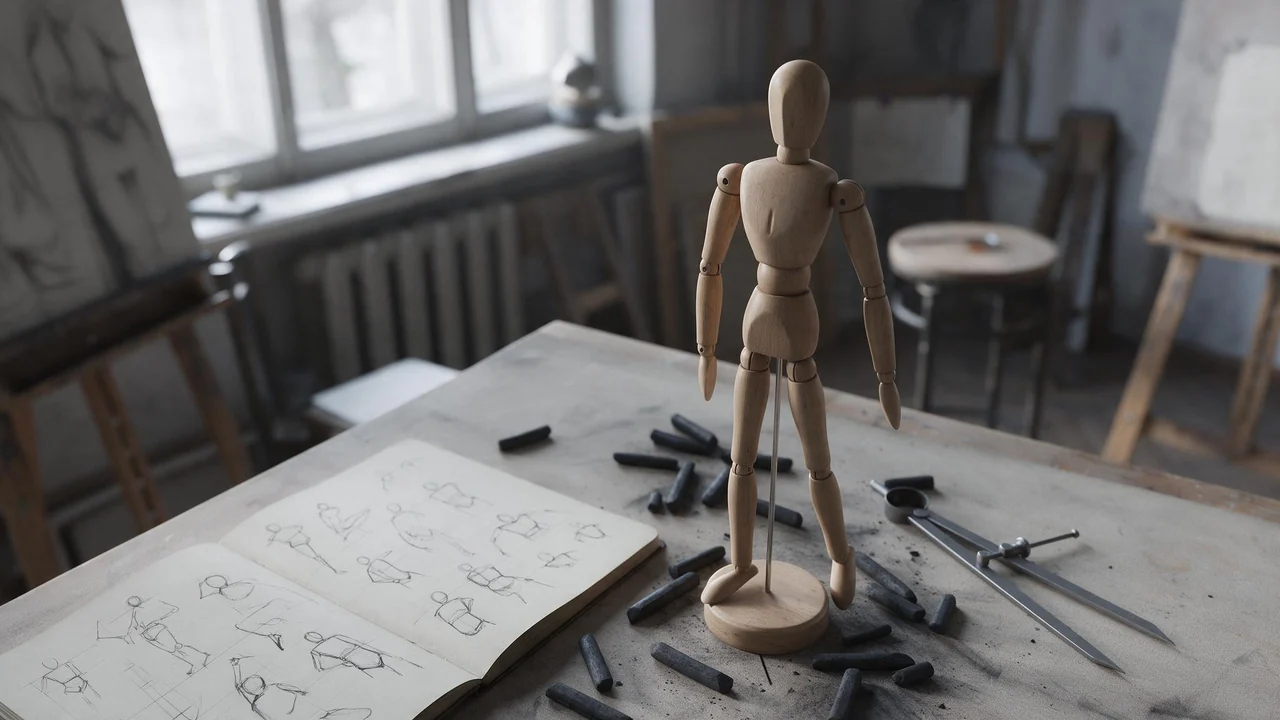
Every figure-drawing teacher says some version of the same thing in the first class: draw the body in front of you, not the one you expect. Beginners draw the expected one. They lengthen the legs, narrow the waist, smooth the skin, and every model on the stand comes out as the same person.
Image models make the beginner's mistake at scale. Leave the body unsaid and the model fills it in with its default, which is the most common body in the pictures it learned from: young-adult, slim, smooth, and much the same from one character to the next. These are seven notes for drawing the body you actually mean in Fellowi Images, written for adult characters and kept, like the rest of this series, about craft rather than content.
Note 1. Name the build first
One plain word sets the whole figure: slim, athletic, muscular, soft, curvy, broad, stocky, heavyset, plus-size, lanky. Pick one, then add one qualifier if you need it: “soft and broad-shouldered”, “athletic with a runner's build”, “plus-size with an hourglass shape”. Two or three build words that pull in different directions (“slim, curvy, muscular”) get averaged into the default you were trying to escape. Slang is a gamble; the plain word is not.
Note 2. Describe proportion as a relation
Teachers measure the body against itself: shoulders against hips, legs against torso, head against height. Models respond to the same relations. “Shoulders wider than her hips”, “full hips and a narrow waist”, “a long torso and short legs”, “a thick neck and heavy forearms”. Body measurements written as numbers are followed far less reliably: the model reads the shape of a sentence better than arithmetic.
Note 3. Height needs something to stand against
In a portrait of one person, “very tall” is invisible: nothing in the frame tells the viewer how tall anyone is. Give the height a yardstick. A doorway she has to duck under, a kitchen counter at her hip, a low camera looking up, a long-legged stride across a wide room. The poses and camera angles guide has the angles that make a figure look tall or compact.
Note 4. Draw the marks of an adult life
What makes a body read as a real adult is rarely its shape. It is the detail a life leaves: freckles across the shoulders, stretch marks at the hips, tan lines, a surgical scar, body hair, visible veins on a forearm, laugh lines, a little softness at the waist. Ask for “natural skin texture” and one or two of these, and the plastic look goes away. Tattoos work as a placement and a style (“a fine-line floral tattoo on the upper arm”); a specific design or lettering will not come out faithfully.
Note 5. Write the age as an adult, specifically
“A woman” gets you the default age. “A woman in her early forties, silver starting at the temples” or “a man in his fifties with a weathered face and a broad chest” gets you someone. Older adult bodies are rarely what these models produce by default, which is exactly why naming the decade changes the picture so much.
Small is a build, not an age. “A petite adult woman” is an ordinary prompt. But some phrases are refused on sight whatever you meant by them: “little girl”, “young girl”, “small girl”, and any stated age under eighteen. That check runs before any coin moves, and its word list is broad on purpose: an adult who gets a false refusal loses one rephrase, and the other kind of mistake is not one we accept. Write “woman” and give her a decade.
Note 6. Let the clothes and the light show the form
A drawing teacher drapes cloth over the model because fabric shows the form underneath. The same holds here: a knit that clings, a linen shirt that hangs straight, a dress cut on the bias that follows a curve. The fabric guide has the words, and side light from a window does the rest, because shadow is what turns a silhouette into a volume.
Note 7. Freeze the body line for a series
Each render reads the prompt fresh, so the same build drifts from one picture to the next. Write the body as one fixed line (build, proportion, age, two skin details) and paste it unchanged into every prompt. Attach the best result as the first reference image; with the aspect ratio on Auto the frame is based on it, and the figure carries over far better than from words alone. Each reference adds to the price, which is listed on the product page. The full method is in keeping a character consistent.
If you switch on Enhance prompt quality, check that your body line survived. The rewrite expands the prompt in full, and a carefully chosen “soft, broad-hipped, in her fifties” can come back as something more generic.
What still goes wrong
- The pull of the default. Heavy styling (a strong art style, a busy scene) tends to drag the body back towards the average. If the build matters most, keep the rest of the prompt simple.
- Exaggeration.“Muscular” can turn into a bodybuilder and “curvy” into a cartoon. Add a moderating word: “lightly muscular”, “naturally curvy”.
- Hands and feet. Still the hardest parts of any figure. Expect a few tries, or a pose that keeps them simple.
- Exact repeats. A particular scar or birthmark will not land in the same place twice. Treat small marks as texture, not as identity.
The lines that do not move
Every character is an adult, and the body has to say so as plainly as the prompt does: a figure drawn to look like a child is against our terms whatever age the prompt claims. Age-play and non-consent are refused the same way. No body may be a real, identifiable person's: an invented face on a recognisable person's figure, or the reverse, is still an attempt at their likeness. The rules in full are in what the law and our terms allow, and the face that goes with the body has its own notes in hair and makeup.
Questions this post answers
Why does every character I generate have the same body?
Because a body you do not describe gets filled in with the model's default, which is a narrow, very common one. Name the build and one proportion, such as soft and broad-hipped or tall and muscular, and the default stops winning.
Can I ask for a petite character?
Yes, petite is a build and a petite adult woman is a normal prompt. What you cannot do is make the build read as a child: phrases such as little girl or young girl are refused on sight, and so is any stated age under eighteen.
How do I keep the same body across a series of pictures?
Keep the body line word for word in every prompt and attach your best picture as the first reference image. Proportions still drift a little between renders, so choose the closest result and keep it as the next anchor.
Keep reading
NSFW AI Boudoir Lighting: Five Recipes You Can Paste Into a Prompt
Light is the part of an intimate AI picture most people leave to chance. Five recipe cards, one sentence each, plus how to keep a whole set under the same light.
NSFW AI Outfits and Fabrics: A Small Dictionary for Better Prompts
Fabric words do a lot of quiet work in an intimate AI picture. A six-entry dictionary with the phrase, the look and the usual failure, plus how to write one outfit sentence.
NSFW AI Image Series: Telling a Story Across Six Frames
One good picture is a moment. Six that belong together are a story. A shot list from establishing frame to quiet close, with the settings that keep it one character.