

NSFW AI Fantasy Characters: Designing an Original Adult Elf, Vampire or Knight
By The Fellowi Team · · 7 min read
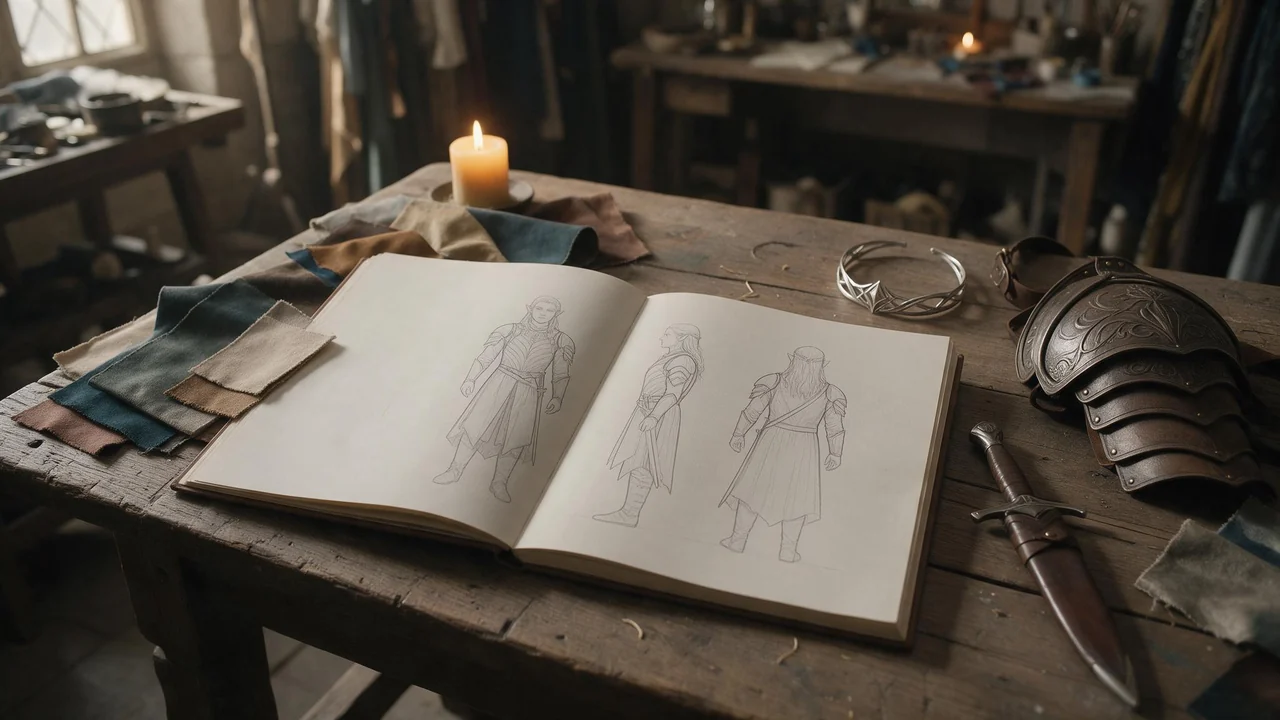
Fantasy is where character generation stops being a picture and starts being somebody. An elf ranger with a broken arrow in her quiver, a vampire countess who has outlived three husbands, a knight whose armour does not match because she lost the left pauldron at a river crossing. None of them exist anywhere else, which is exactly the point. This post is a workshop: one character sheet, filled in line by line, and then the rules that the genre tempts people to forget.
The character sheet, five lines
Costume departments work from a sheet, and so should you. Five lines are enough, and each one does a different job in the prompt.
- Who, with an age that is obviously adult:“a woman in her thirties, an elf ranger, weathered and calm”. Fantasy races invite ageless or childlike faces; naming a grown age and a lived-in face closes that door from the first word.
- One signature feature:“a thin silver scar through her left eyebrow”. One, not five. A single mark is what a model can repeat; a list of them gets shuffled.
- The costume, as materials:“a dark green wool cloak over boiled leather, a silver circlet”. Materials render better than adjectives, the same lesson as the fabric dictionary.
- One prop with a story:“a longbow with a cracked grip wrapped in red cord”. A prop places her in a world faster than a background does.
- The light of her world:“cold dawn light in a pine forest” or “candle light in a stone hall”. Light is mood, and the lighting guide goes deeper.
Read together, the sheet is one long sentence you can paste at the start of every prompt for that character, then add the scene after it.
Three archetypes, three traps
Elves drift young. Pointed ears and smooth skin pull the model towards a teenage face, so the sheet must carry adult cues: age stated, a strong jaw or laugh lines, posture that belongs to someone with a past. Vampires drift into a costume shop. Fangs, a high collar and red eyes at once read as Halloween; pick one gothic marker and let the light do the rest. Knights drift into chrome. Full shining plate looks like a toy; dented, mismatched, strapped armour looks like it has been worn, and a woman in worn armour reads as a person rather than a figurine.
Keeping her the same
The sheet keeps the words stable; a reference image keeps the face stable. Once one picture comes out right, attach it as a reference to the next and reuse the sheet word for word. The first reference is the one automatic framing follows, so put the best portrait first. The enhancer can help or hurt here: its Anime and Artistic styles suit painted fantasy, its Photographic and Realistic styles suit a live-action look, and any rewrite can trade your careful scar for a generic one, so read the prompt it returns. For the full routine, see keeping one character consistent.
The lines that do not move
Fantasy is fiction, and the rules apply to fiction anyway. Every character is a clearly legal-age adult. Anything that refers to a minor, by number, by word or by context, is refused before a single coin moves, and the prompt is not kept; “she is a thousand years old” does not rescue a character drawn as a child, and age-play and non-consent are refused just the same. No real person’s face, whatever the costume. And a famous character from a game, film or anime is not yours to publish or sell: our terms forbid output that infringes another work, so borrow a mood, a palette or an era, never a named person. The longer version is in the legal guide.
What the generator cannot do for her
It cannot keep small heraldry, runes or writing on armour identical across a set; those wander, so keep them out of the sheet or accept that they change. It cannot hold an elaborate costume exactly when the pose changes a lot. And it cannot guarantee that her face survives a style switch from painted to photographic. Treat each picture as a take of the same actor, not a frame copied from the last one. Prices, quality levels and how many references a picture can carry are on the product page.
Start with the sheet in Fellowi Images, and if she deserves to move, the image series guide ends with animating one frame.
Questions this post answers
Can I generate a well-known character from a game or anime?
Not as something you publish or sell. A named franchise character belongs to its rights holder, and our terms forbid output that infringes another work, so design an original character that borrows a mood, not a face.
How do I keep the same fantasy character across several pictures?
Write a short character sheet and reuse its exact wording, then add a reference image from your best result. The reference carries the face and the costume, and the sheet keeps the details from drifting.
Why was my fantasy prompt refused before it ran?
A prompt that refers to a minor, by age, by word or by context, is refused before any coin is taken, and fantasy framing does not change that. Describe the character as a clearly adult person and the refusal does not apply.
Keep reading
NSFW AI Image Series: Telling a Story Across Six Frames
One good picture is a moment. Six that belong together are a story. A shot list from establishing frame to quiet close, with the settings that keep it one character.

NSFW AI Boudoir Lighting: Five Recipes You Can Paste Into a Prompt
Light is the part of an intimate AI picture most people leave to chance. Five recipe cards, one sentence each, plus how to keep a whole set under the same light.
NSFW AI Poses and Camera Angles: Where the Camera Stands Changes the Picture
Light and fabric are only half of a picture. Where the camera stands decides the rest: height, distance, lens, pose and gaze, as a photographer's shot list you can paste into a prompt.