

Winter and Holiday Scenes in AI Character Images: Snow Light, Cabins and Festive Wardrobe
By The Fellowi Team · · 7 min read
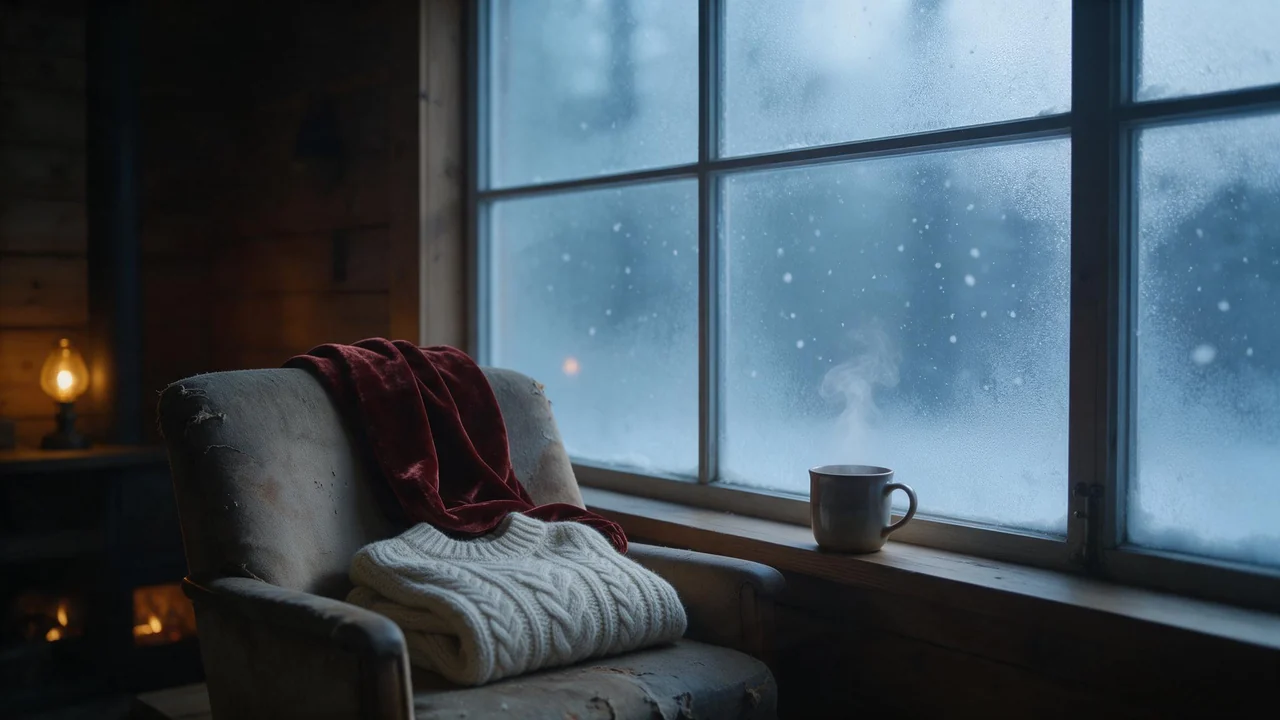
Winter is the season people most want to put their character into, and the one that punishes vague prompts hardest. Ask for “a cosy winter scene” and you get a brown room, an orange glow, a white window and a face the model averaged out of a thousand greeting cards. The fix is to treat it the way a photographer treats a winter booking: one day, worked in order from the first cold light to the lit tree at night. These are the notes for that day. Every character here is an invented adult, and nothing in them is explicit; it is light, rooms and clothes.
Why the season needs its own notes
Rooms and light in general are covered already, in scenes and settings and the lighting guide. Winter changes two things those posts take for granted. Outside, the ground turns into a huge white reflector that throws soft, blue light upward and into the room. Inside, people turn on every warm lamp they own. Most of a good winter picture is the argument between those two colours, and the prompt has to say who wins.
Morning: snow light through a window
Start where the light is kindest. Fresh snow on an overcast morning gives a soft, shadowless light, slightly blue, that reaches the face from the side and a little from below. Say it in those words: “overcast winter daylight reflected off fresh snow, soft and cool, falling on her face from the window to her left”. Two things go wrong here. The window burns out to plain white and the snow disappears, so ask for “the snowy garden still visible through the glass”. And the blue spreads to her skin, so add “natural skin tone” or let a warm sweater carry some colour back into the frame. Frost in the corners of the glass is the one detail that tells the viewer it is cold before they read anything else.
Afternoon: warm inside, cold outside
The classic winter picture is two temperatures in one frame: warm amber light on her from a lamp or a fire, cold blue daylight behind her in the window. The model will not invent that contrast for you. Left alone it picks one colour or blends the two into a muddy middle. Name each light, its colour and its side: “warm amber lamplight on her face from the right, cold blue daylight from the window behind her”. The cold light then works as a rim along her hair and shoulders, which separates a dark sweater from a dark room. Late afternoon, when the sky outside turns deep blue and the lamps are already on, is the best hour of the whole day. Call it “blue hour” and the model knows it.
Two rooms that do the work
The cabin. Log walls, a wide plank floor, a stone fireplace, a wool blanket over the arm of a chair, boots drying by the door, a window full of pine trees and snow. The trap is that every one of those words is brown, and the picture becomes one brown surface with a face in it. Give the room one colour that is not wood: a dark green armchair, a red blanket, the blue of the window.
The city flat. A tall window, snow settled on the balcony rail, the streetlights coming on below, a radiator under the sill, a small tree with warm string lights in the corner. Here the trap is the lights: ask for them sharp and you get a mess of bulbs and wire. Ask for them “out of focus in the background” and they turn into the soft round glow that reads as December. Either room works for a portrait; the cabin suits a slow morning, the flat suits an evening.
Festive wardrobe that renders
Winter clothes are thick, and thick fabric is easier for a model than thin, so the season is kinder here than it looks. The general vocabulary is in outfits and fabrics; the winter subset that renders well:
- Knit: a chunky cream cable-knit sweater, a ribbed black turtleneck, an oversized cardigan slipping off one shoulder. Name the stitch, not just the garment.
- Velvet: deep green or burgundy, a dress or a blazer. Velvet catches warm light at every fold, which is exactly what a lamplit room needs.
- Outdoor layers: a long camel wool coat, a faux fur collar, leather gloves, a knitted hat pushed back so the hairline shows.
- One red accent: a scarf, a lipstick, a ribbon in the hair. One reads as festive. Three read as a shop window.
What breaks: the novelty Christmas sweater. Reindeer, snowflake rows and knitted lettering are small repeating patterns, and they come out as noise or nonsense text. Ask for a plain knit with one stripe and let the room carry the festive part. Tinsel and glitter turn into grain for the same reason. A Santa hat works, but it reads as a costume, so keep it to one picture.
Steam, frost and small weather
The details that sell cold are small, and each one needs saying on its own. Steam rising from a mug held in both hands. Her breath visible in the air on a street at night. Condensation on the window with one line drawn through it by a finger. A few snowflakes caught in dark hair. Be careful with the word “snowing” on its own: it can fill the whole frame with white specks in front of her face. “Light snowfall outside the window, out of focus” keeps the weather where it belongs. For the outdoor shot, cheeks and the tip of the nose a little pink from the cold do more than any amount of snow.
One character across a small winter set
The day above is already a set: the morning window, the afternoon by the fire, an evening walk in the coat, the lit tree at night. Four pictures of one person, which is the method from telling a story in a series applied to one season. What holds it together:
- Her description line first, unchanged, in every prompt.
- A reference image of her attached to each picture, as in keeping one character consistent.
- One garment that travels through the set. The red scarf is on the chair in the morning, round her neck on the street and over the tree at night. A viewer reads that as one day without being told.
- Room and light change between pictures; her hair, face and signature detail do not.
Setting one frame in motion
Pick the frame with the least going on and the most weather in it. Steam off the mug, snow drifting past the window, a fire moving in the grate: these animate well because the motion is small and it is not her face. Use the still as the start frame in the video studio and ask for one gentle action: she turns from the window, she pulls the scarf closer, she lifts the mug. If you want the clip to land somewhere particular, a second still from the set can serve as the end frame. Big movement, a walk across the room or a spin by the tree, is where faces drift. The details are in turning an image into video.
The lines that do not change in December
Every character is a clearly legal-age adult and fictional, in a cabin as much as anywhere. A holiday setting is not a reason to make anyone younger, and the product checks it in code before a coin is spent: a stated age under 18 and words that mark a character as a minor are refused outright. Nothing non-consensual either. And the person by the tree is someone you invented: our terms forbid sexual or intimate imagery of a real, identifiable person, so a celebrity in a Christmas jumper is not a picture we make.
What a winter prompt cannot do
Snow is hard. Large white areas lose their texture, and a snowfield behind her can come out as a flat white wall; a darker sky or a line of trees gives it shape. Adding snow to a finished picture is not a small edit either: an edit with a reference redraws the whole image, so the window you frosted can also soften her jaw. Check the face before you keep anything. Failed generations are refunded and a finished render you simply do not like is not, so try the light on a few cheap drafts first, as in draft first, spend later, and check the costs on the product page. Then open the image studio, paste her line, and start with the morning window. If the picture makes someone reach for a blanket, the light is right.
Questions this post answers
How do I get cold winter light in an AI image?
Name the source and its colour: overcast daylight reflected off fresh snow, cool and blue, coming through a window. If you want her face warm, add one warm lamp or a fire and name both colours, or the model mixes them into a flat grey-orange.
Why do Christmas sweaters come out garbled?
Small repeating patterns such as reindeer, snowflakes or lettering tend to dissolve into noise. Ask for a plain knit with a cable texture or one red stripe, and put the festive detail in the room instead.
How do I keep the same character across a winter set?
Paste her description line first in every picture, attach a reference image of her, and carry one garment, such as a red scarf, through the whole set. Change the room and the light between pictures, not her.
Keep reading

You Do Not Need a Graphics Card: AI Images in a Browser vs a Local Install
A laptop, a browser tab and a handful of coins. What you gain by not installing anything, and what you give up.

Fellowi Coins, Explained: What You Actually Pay Per Image
Six packages, real prices, coins that never expire, and a refund if a generation fails.
Eight Things I Stopped Doing With These Tools
Getting better at this was mostly subtraction. Here is everything I dropped, why, and what replaced it.