

NSFW AI Image Series: Telling a Story Across Six Frames
By The Fellowi Team · · 7 min read
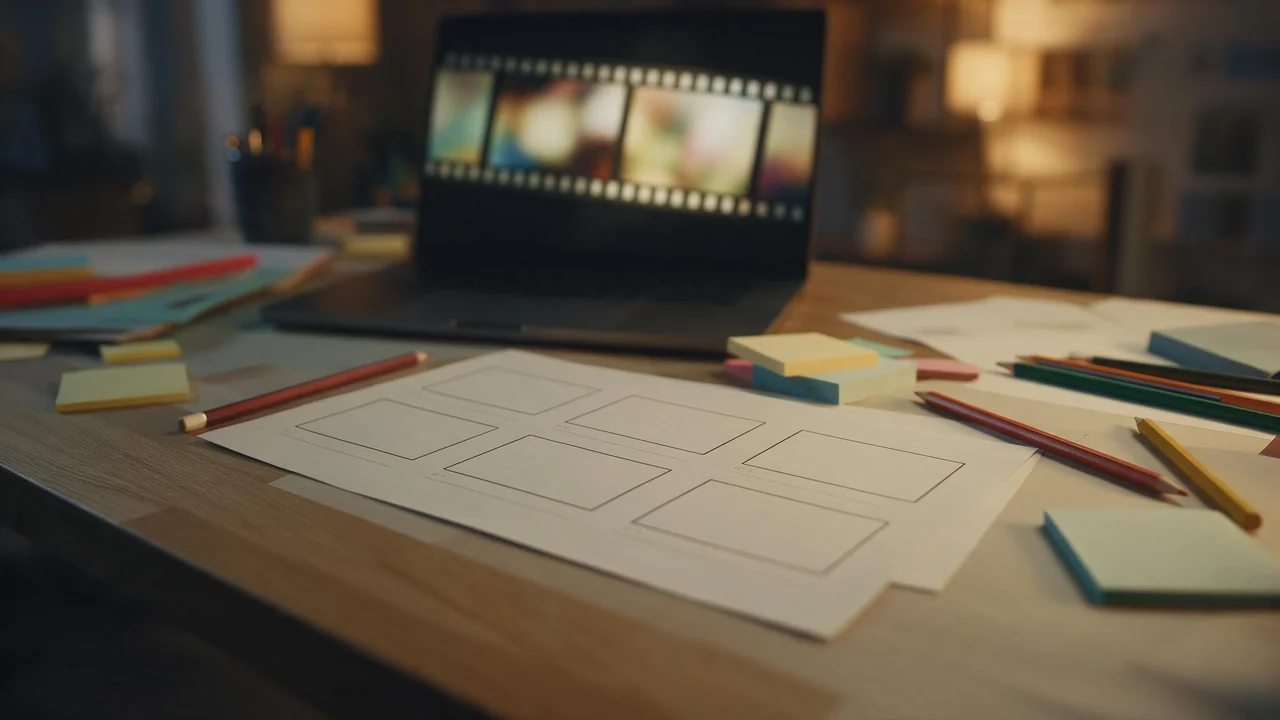
One good picture is a moment. Six that belong together are a story, and the difference is mostly planning. Film people call the plan a shot list: a short numbered sheet of what each frame shows, written before anything is generated. This post walks through one for a quiet, suggestive series about an evening in, and shows where the settings come in.
The six frames
- Frame one, the room: a wide shot of the space with no one in it, or only a silhouette. Sets the light and the mood for everything after.
- Frame two, the arrival: a medium shot of the character in the doorway. This is where you introduce the reference picture.
- Frame three, the detail: a close shot of hands, a glass, a ribbon. Details are cheap to get right and make the set feel real.
- Frame four, the closeness: a portrait, face turned half to the light. The emotional centre.
- Frame five, the pull-back: the same moment from further away, so the room returns.
- Frame six, the quiet close: the character at the window or turning off the lamp. A calm end, not a climax.
Nothing here needs to be explicit to work. The pacing is what carries it, and a suggestive series keeps its power because the viewer fills the gaps.
What to hold fixed
Three things never change from frame to frame: the character reference, one sentence of lighting and the setting words. Add the reference to every prompt. The first reference is what automatic framing follows, and a reference carries the look as well as the face, so outfit and hair come along. Change only the framing and one small action per frame. The budget model has no references, so it cannot carry a character; use the mini family to block out the six frames and the full family for the ones you keep.
Where a series breaks
The enhancer is the usual culprit. It rewrites each prompt a little differently, and over six frames those small differences add up to a different person. Read the final prompt, or switch the enhancer off for the series. Small props also drift: the glass in frame three will not match the glass in frame five unless you describe it the same way twice. If a frame fails to generate, coins are refunded automatically, so retries cost nothing extra. Prices and limits are on the product page.
From a frame to a clip
Pick the strongest frame and use it as the start of a short clip in Fellowi Video. The start frame is free, an end frame is billed like a reference, sound is off by default with a surcharge if you want it, and a clip takes minutes, not seconds. The detail frame or the pull-back usually animates best.
What a series cannot do
It cannot guarantee a pixel-identical face, readable text on a prop, or the same hand position twice. It also keeps every rule: characters are always clearly legal-age adults, and anything involving minors, age-play or non-consent is refused outright, however the story is framed.
Start with the first frame in Fellowi Images. For the longer craft of consistency read the consistent character guide, and for the reference mechanics see editing with your own photo.
Questions this post answers
How many frames does a story series need?
Six is a comfortable length: enough for a beginning, a middle and a close without drifting. Fewer feels like a gallery, more usually means the character starts to wander. You can always add a second chapter later.
What should I keep the same and what should I change between frames?
Keep the character reference, the lighting sentence and the setting. Change only the framing and one small action per frame. If you change several things at once, the model changes the person along with them.
Can I turn a frame from the series into a video?
Yes. Use the frame as the start image of an image-to-video clip. The start frame is free, an end frame is billed like a reference, sound is off by default, and a clip takes a few minutes to render.
Keep reading
NSFW AI Fantasy Characters: Designing an Original Adult Elf, Vampire or Knight
An elf ranger, a vampire countess, a knight with a scar: original fantasy characters are where AI pictures get personal. A character sheet, the anchors that carry her, and the rules that hold.

NSFW AI Generation Glossary: Every Term Before Your First Picture
You can start without reading a manual. These are the words on the controls around the prompt field, each explained in a breath, with the article that goes into detail.
NSFW AI Art Styles: A Guided Tour from Photoreal to Pin-Up
Five looks for adult AI images, the vocabulary that moves a model toward each, one suggestive example prompt apiece, and how to keep a whole set in one style.