

NSFW AI Couple Images: Two Characters in One Frame Without Merged Faces or Extra Limbs
By The Fellowi Team · · 6 min read
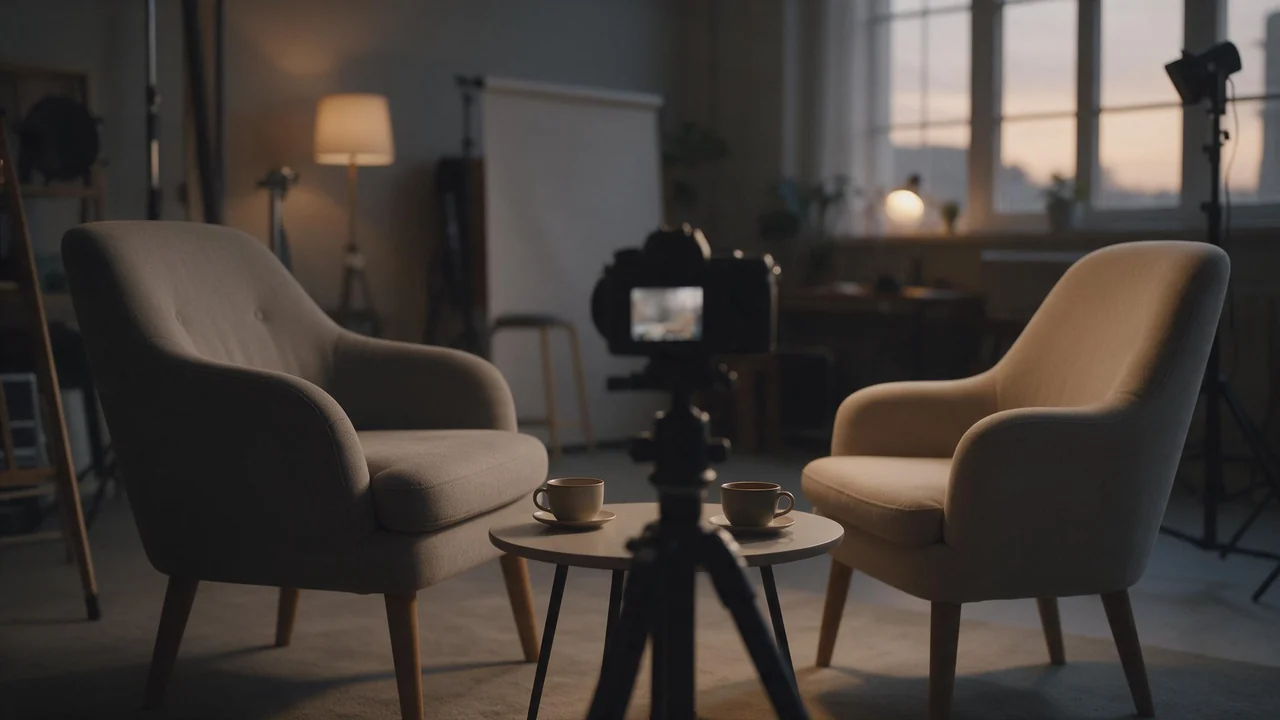
A picture of one adult is a portrait. Put a second one in and it becomes a scene, and a scene has blocking: who stands where, who touches whom, where the camera is. Leave that to the model and it improvises badly. Her red hair turns up on him, the two faces drift toward one shared face, and somewhere around the waist a third arm appears that belongs to nobody. Directors solve this on stage with cues. Here are five, written for still images of two fictional adults you invented.
Why two people go wrong
A model does not keep a list of who has what. It reads the prompt as one pool of details and paints them across the whole frame, so the more two people share the frame, the more their details share each other. People who work with these tools call it attribute bleed. Every cue below does the same job: it ties each detail to one person, or gives the model fewer places where the two bodies meet.
Cue 1: one sentence per person
Write the cast list before the scene. “A tall woman in her thirties with short black hair and a green silk slip. A broad-shouldered man in his forties with a grey beard and a white open shirt.” Then the action, in a third sentence. Mixing both into one line (“a couple with black and grey hair in green and white”) is how the beard ends up on her and the silk on him. Keep each person’s details inside their own sentence and refer to them by those details afterwards: “the woman with short black hair”, not “she” three clauses later.
Cue 2: make them easy to tell apart
Two people of the same build, hair and skin tone are the hardest pair to draw, because the model has nothing to hold them apart by. Give them at least two contrasts a stranger would notice across a room: height, hair colour or length, age, build, one dressed and one in lingerie. The contrast is not only for the reader. It is what stops the faces from averaging into one.
Cue 3: one touch, named, with an owner
Spare limbs grow where bodies overlap. So choose a single point of contact and say whose it is: “his hand on the small of her back”, “her arms around his neck”, “foreheads touching”. Then keep the other hands simple: in a pocket, on a railing, out of the frame. Three touches at once (an embrace, a kiss and legs intertwined) is the pose that most often comes back with an elbow from nowhere. Hands and gestures covers what to do with the hands that are left.
Cue 4: pull the camera back
The closer the shot, the more the two heads overlap, and overlapping heads are where faces merge. A medium shot from the waist up, or a full shot, keeps both faces whole and gives each its own patch of the frame. Turn them toward each other at an angle rather than nose to nose, so the camera sees two profiles or one profile and one three-quarter face, not one face hiding behind another. A landscape frame has room for two people side by side; a tall frame suits one standing behind the other. For heights, lenses and shot sizes, poses and camera angles has the full list.
Cue 5: hold one, describe the other
If one of the two is a character you have built across a set, attach your best picture of them as a reference, so their face carries over (the cheapest image family takes no references, so pick one that does). You can attach more than one reference, but two faces shown to the model at once can blend into each other, so the steadier habit is one reference for the character you need to keep and a clear written description for the partner. Keeping a character consistent explains how to build that reference in the first place.
The lines that do not move
Both people are adults and drawn as adults; give each an adult age in the cast list. Words that make either character read as a minor, and any stated age under the legal age, are refused before a coin moves. Minors, age-play and non-consent are refused whatever the wording, so the touch between the two reads as mutual and wanted, never one holding the other down. And neither person can be someone real: the terms forbid sexual imagery of a real, identifiable person, which rules out an ex, a colleague or a celebrity as either half of the couple. What is legal and what is not has the fuller picture.
What it cannot do
Two people stay harder than one, and the cues above raise the odds rather than guarantee the result. There is no brush to repair one face or one arm afterwards: an edit with the picture as a reference redraws the whole image, so fixing his hand may move her hair. A failed generation is refunded; a finished picture with a shared face is not, so draft a few versions first and keep the one where both people are clearly themselves. What each render costs is on the product page, and the studio is at Fellowi Images. When a pair will not separate, the old stage answer still works: move them a step apart.
Questions this post answers
Why do two characters in an AI image end up with the same face?
The model reads the prompt as one pool of details and spreads them across everyone in the frame, so hair, eye colour and even the face leak from one person to the other. Describe each person in their own sentence and make them differ in two or three obvious ways.
How do I stop extra arms and legs in an AI couple picture?
Name one point of contact and say whose hand or arm it is, then keep every other limb simple or out of the frame. Tangled poses with several touches at once are where spare limbs appear most often.
Can I use reference images for both characters in one picture?
You can attach several references to one generation, but the model may blend two faces it was shown. It is steadier to give a reference for the one character you need to hold and describe the second in words.
Keep reading
An AI Image Generator Without a Subscription
Pay once for a pack, spend it one picture at a time, keep what is left. Here is the whole route from a sentence to a file on your disk.
AI Concept Art for an Indie Game: One Week from Mood to Key Art
Monday moods, Tuesday environments, Wednesday a character who keeps his look, Thursday key art. Plus what stays outside it: no sprite sheets, no tiles, no engine-ready assets.

AI Wallpaper Generator: Phone and Desktop Wallpapers That Fit the Screen
A wallpaper is a picture with a clock, a dock and twenty icons on top of it. Screen by screen: the frame to pick, where to leave empty space, and what an AI generator still cannot do for you.