

AI Art for Your Tabletop Campaign: Character Portraits, NPCs and Handouts
By The Fellowi Team · · 7 min read
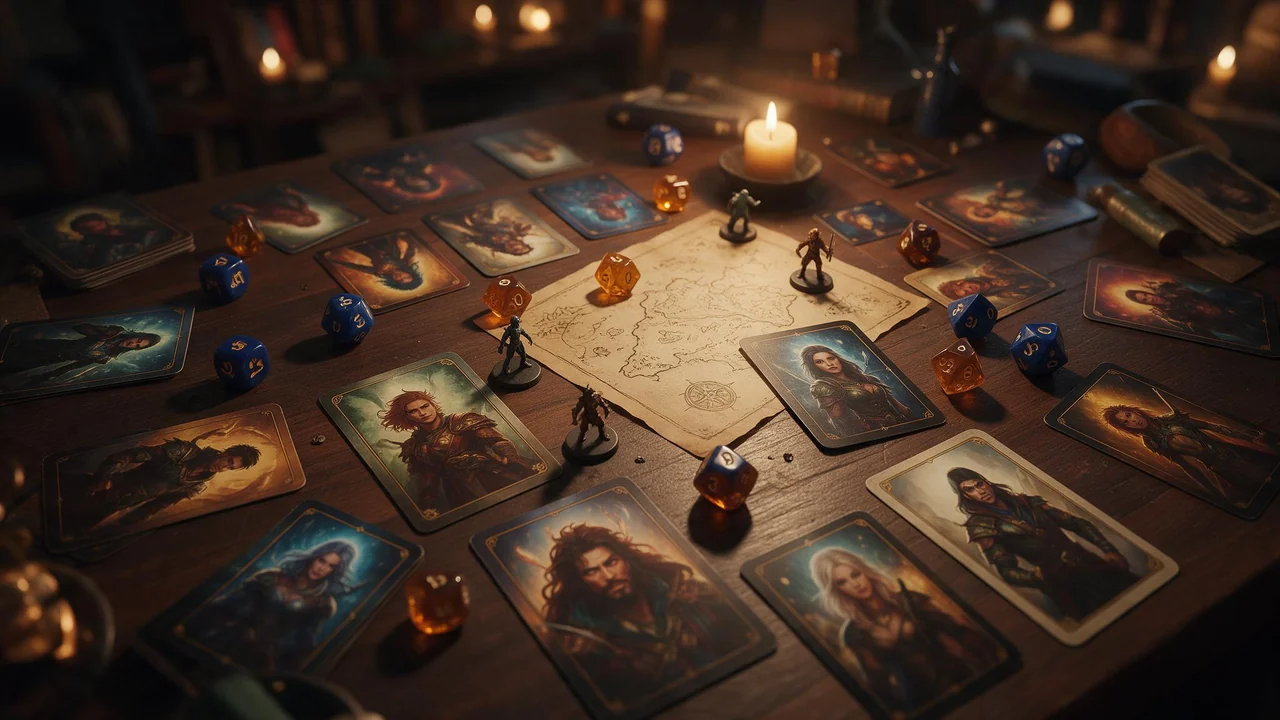
You describe the innkeeper as “gruff, with a scar”, and five players picture five different men. That is the charm of theatre of the mind, right up until session twelve, when nobody remembers whether the scar was on the left cheek or whether the innkeeper was a woman. A face on the table settles it. Here is a prep routine for putting faces, places and props in front of your players without turning prep night into an art degree.
Start with the players’ own characters
Ask each player for three lines: who the character is, one thing they wear or carry, and one expression. Let the player write them; it is their hero. Generate a 1:1 square for the token or the video-call avatar, and a 2:3 portrait for the character card. Two or three rolls each, then let the player choose. A player who picked their own portrait looks at it every session.
NPCs in a batch, drafted cheap
You will need a dozen faces for a market scene and use three of them. So draft at the lowest quality first, keep the keepers, and only then spend on a finished version, as the draft-first guideexplains. Keep one style line identical across the batch, something like “painted fantasy portrait, warm candlelight, muted palette”, so the whole cast looks like one world. The studio offers more than one image model, and the comparison helps you pick which one suits painted work.
Locations at cinema width
A location wants a wide frame: 16:9 for a screen at the table, 21:9 for a sweeping vista on the opening slide. Describe mood and weather before architecture: “a fishing village at dusk, fog off the water, lanterns” beats a list of buildings. Hold the picture back until the players walk in; a location revealed at the right moment is worth ten described ahead.
Handouts: generate the paper, write the words
A letter sealed with wax, a wanted poster, a page torn from a journal. Generate the prop without text, a blank aged parchment with a broken seal, and write the words yourself in an editor or by hand. Lettering inside a generated picture is unreliable, and a clue your players cannot read is not a clue.
The villain who keeps her face
A recurring villain is the one character whose face must not change. Once a portrait lands, save it and attach it as a reference every time she appears: in shadow at the window in session three, unmasked in session nine. The reference holds the face while the prompt changes the scene. The reference image guide walks through it.
Animate the reveal
For the one moment that deserves it, the dragon lifting its head, the portrait whose eyes follow, turn the still into a few seconds of motion with Fellowi Video. The guide to animating a photo covers the prompt. Keep it for the big beat; a table that sees motion every scene stops noticing it.
Selling a module, and other people’s faces
If you publish an adventure, the terms put no restriction on commercial use and ask for no share or credit. They also give no exclusivity, another person can make something similar, and no warranty about copyright, so read the commercial use guide and who owns AI images before you print. Characters from a published setting or a film belong to their owners; invent your own. And a friend’s face goes into a reference only with that friend’s permission.
What it will not do for your table
It will not draw a battle map on a grid you can play on, the squares drift and the walls do not line up, so keep your battle mat or a dedicated map tool. It will not letter a handout you can read. It will not give you the same face pixel for pixel across a campaign; a reference keeps her recognisable, not identical. And it will not hand you a franchise’s characters to sell. What each picture costs is on the product page, not here.
Prep one session’s worth tonight in Fellowi Images: two player portraits, three NPCs, one location. Then watch what your players do when the innkeeper finally has a face.
Questions this post answers
Can I use AI portraits in an adventure module I sell?
The terms put no restriction on commercial use and ask for no share or credit. They also grant no exclusivity and no warranty that a picture is free of third-party rights, so read the commercial use guide before you print.
Can I make a portrait of a friend's character from their photo?
Only with their permission. A reference photo must be of you or used with the depicted person's consent, and plenty of players prefer a face that is not their own anyway.
Will the same NPC look identical in every picture?
Close, not identical. Attaching an earlier picture as a reference keeps the face recognisable, but expect small drift in hair, clothing and details, and re-roll when it wanders.
Keep reading
My First Week Generating Images, Including the Parts I Got Wrong
I burned my free coins in about ninety seconds and had nothing to show for it. Here is what the rest of the week looked like.
Your First AI Picture on Free Sign-Up Coins, Step by Step
No password, no card, no plan. The seven steps from an empty inbox to a downloaded picture, and the four things the free coins will not do for you.
NSFW AI Facial Expressions: Write the Look, Not Just the Face
A perfect face with a blank stare is a mannequin. Notes on writing the look: eyes, mouth, brows, a reason behind the smile, and the expressions image models still get wrong.