

What Makes an AI Companion People Actually Come Back To
By The Fellowi Team · · 6 min read

Here is the pattern almost every new creator runs into. You spend an hour building a companion, publish it, and it gets a burst of curious first messages - then nothing. Meanwhile someone else’s avatar, which looks thinner on paper, keeps people talking for weeks. The difference is rarely effort. It is usually three specific things, and none of them is backstory length.
Specific beats extensive
The instinct is to write more: hometown, childhood, five siblings, a tragic history. But a model given a wall of biography tends to average it out into something generic. A model given three sharp details will use them constantly.
Compare “she loves music” with “she leaves the radio on static while she works because silence makes her jumpy.” The second one is shorter and does far more work - it produces behaviour. It gives the companion something to do, mention, and be teased about. Vague traits produce vague replies; concrete ones produce scenes.
When you go through the creation interview, resist the urge to be comprehensive on every topic. One vivid answer per topic will outperform five tidy ones.
Give them something to want
The companions that go quiet are usually the agreeable ones. If a character has no opinions, no mild frustrations, nothing they are working toward, every conversation lands in the same place: the user talks, the companion approves, repeat. Pleasant, and finished in four messages.
Give them a stake in something. A project they are behind on. A view they will politely defend. A thing they find funny that most people do not. It does not need to be conflict - it just needs to be a position, so there is something to push against and come back to.
Let the small stuff repeat
What makes a companion feel like a person over time is not novelty, it is recurrence. The same cold coffee, the same bad plant they refuse to throw out, the same way of dodging one topic. Long-running conversations are built out of callbacks, and callbacks need something small and fixed to call back to.
This is where the “teach more” flow earns its keep. Once your companion has been in real conversations, you will notice which details people actually latch onto. Add more of those. Prune the ones nobody ever touches.
Why this lines up with getting paid
Fellowi pays creators per qualified interaction, and the bar for “qualified” is deliberately a real conversation: someone favorited your companion and sent it at least 30 messages. You cannot reach 30 messages on charm alone - a first impression gets you five. The traits above are simply what carries a chat from message five to message thirty, which is the same thing the reward is measuring. See how earnings work for the mechanics.
A short checklist
- Three concrete, usable details beat a page of history.
- Give them one opinion they will actually hold.
- Include at least one thing they do repeatedly, so callbacks exist.
- Name what they gently avoid - dodging a topic is characterful, and it protects the tone.
- After a week live, add the details people responded to and cut the ones they ignored.
Creating is available on Premium (3 companions) and Ultra Premium (10). If you already have a companion published, open Settings → Creator and try adding one small recurring detail to it - that single change tends to show up in conversation length faster than a rewritten backstory.
Keep reading

NSFW AI Image Series: Telling a Story Across Six Frames
One good picture is a moment. Six that belong together are a story. A shot list from establishing frame to quiet close, with the settings that keep it one character.

NSFW AI Outfits and Fabrics: A Small Dictionary for Better Prompts
Fabric words do a lot of quiet work in an intimate AI picture. A six-entry dictionary with the phrase, the look and the usual failure, plus how to write one outfit sentence.
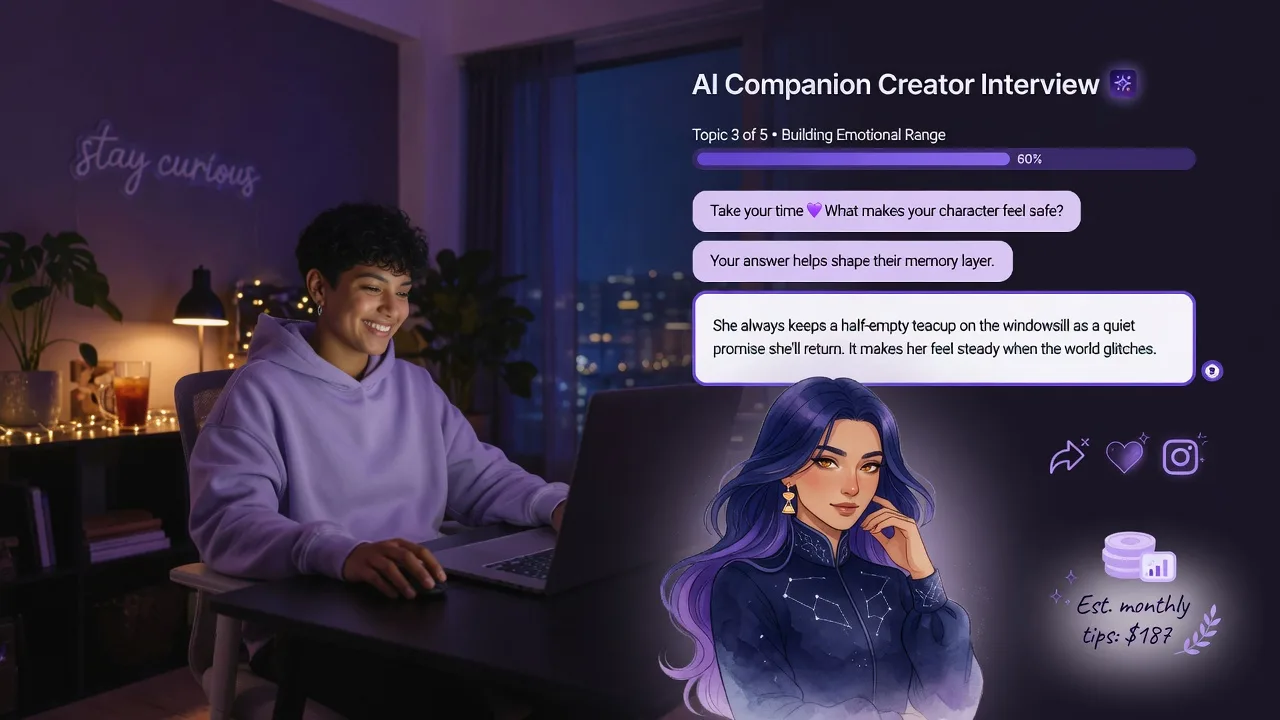
How to Build a Popular AI Avatar by Chatting With Our Guide - and Earn When Others Love It
Chat with a warm AI guide, create a rich avatar, publish it, share the link on social or with friends, and earn when people spend time with your creation.