

How to Start a Roleplay With an AI Companion (and Keep It Going)
By The Fellowi Team · · 7 min read

Anyone who has run a tabletop game knows the secret: the first five minutes decide the whole evening. Give the players a vivid room and a problem, and they will carry the rest. Give them "so, what do you want to do?" and you get a long, polite silence. Roleplay with an AI companion works the same way, and this is the advice we would give a friend sitting down to their first scene.
Your first message is the whole session zero
A new chat opens with a short greeting from the companion. You do not have to answer it politely and then ask for a story; your reply is where the story starts. Put three things in it: who you both are in this scene, where you are, and what just happened. For example:
The last train has left without us. We are the only two people on a snowed-in mountain platform, and you are holding the only map. I am the courier you owe a favour. I stamp my boots and say: "So. Where does your map say we sleep tonight?"
That is enough. The "what just happened" matters most, because it hands the companion something to react to instead of asking it to invent a plot from nothing. Companions are told to speak about their own fictional life as their own, so they will happily take the role you give them. They are also told not to invent facts about you, which is a good rule in ordinary chat and a quiet trap in a story: if your character has a scar, a secret or a sister, say so. The companion will not make one up for you.
A small practical point: write in the language you want the story in. The reply follows the language of the conversation, and it also tends to follow your energy, so a few careful sentences get a few careful sentences back.
Give the story somewhere to go
A scene without a direction turns into small talk in costume. The fix is the oldest one in the game master's book: a want, an obstacle and a clock. The courier wants to reach the valley by morning; the pass is closed; the storm gets worse every hour. Now every message has a reason to exist. You do not have to plan the ending. You only need the next thing that could go wrong.
Let the companion lead sometimes
The best scenes are the ones where you are surprised. Leave doors open: end a message on a question, a sound behind the door, a choice for the other character to make. "What does she do?" is a perfectly good move. If a reply goes somewhere you do not like, the Regenerate button asks for another take on the same moment, which is kinder to the story than arguing with it in the next message.
How far a companion will steer on its own depends on who it is. The curated legal-age companions may take the initiative in an adult scene; every other companion keeps things non-explicit and, if the story turns sexual, warmly points you to the legal-age category instead. The AI psychologists do not roleplay romance at all. And some things are refused by every companion, whatever the story: anything sexual involving minors, age-play or non-consent.
Stepping outside the story
Sometimes you need to talk to the author rather than the character: "(let's skip to the next morning)" or "(keep her colder toward me for now)". A short note in brackets usually works. It is not a special command, just a convention the companion reads like any other text, so keep these notes rare and short. Every one of them is a message, and a story that is half stage directions stops feeling like a story.
Two things will bring a companion out of character by design. If you sincerely ask whether it is an AI, it tells you the truth, warmly, and then eases back into the scene. A question your character asks inside the fiction is not meant to trigger that, but the line is judged by the model, so if you want to stay in the story, make it clear the story is asking. And if a message suggests you are in real distress, the companion drops the roleplay and talks to you, not to your character. More on both in when your companion breaks character.
What the companion actually remembers
This is the part worth being honest about. On every reply the companion sees the most recent stretch of the chat word for word. Everything older is folded into a short written summary that keeps the tone, the unresolved threads and the facts that matter, and drops the rest. On top of that sit durable memories, which are facts about you, not about the plot. The full mechanism is in how companion memory works.
So memory is retrieval, not perfect recall. In a very long story, the name of the innkeeper from the second evening can quietly fall out of the summary. When a detail matters, bring it back into the conversation yourself now and then; a character who mentions the map again keeps the map alive.
One side effect to know about: the story lives in its own chat. Another companion does not know what happened on that platform. Durable memories, though, belong to your account and every companion can draw on them, as do my companions share memories explains. If a line you wrote in character ("I live in the lighthouse") ends up saved as a fact about you, delete it on the memory page in Settings.
Picking a long story back up
The chat is still there when you come back, and the companion picks up from the summary and the last messages. What helps most is a two-line recap, written the way a game master opens the next session: "Previously: we reached the hut, the map turned out to be forged, and you have not told me who forged it." It costs one message and puts the important facts back in plain sight.
How long a session can run depends on your plan, because messages are counted. The message limits explained post covers how that works, and the product page has the current numbers. If you want more than one character at the table, a group chat puts several companions in one scene, each taking a turn in the same round.
One last trick from the game master's table
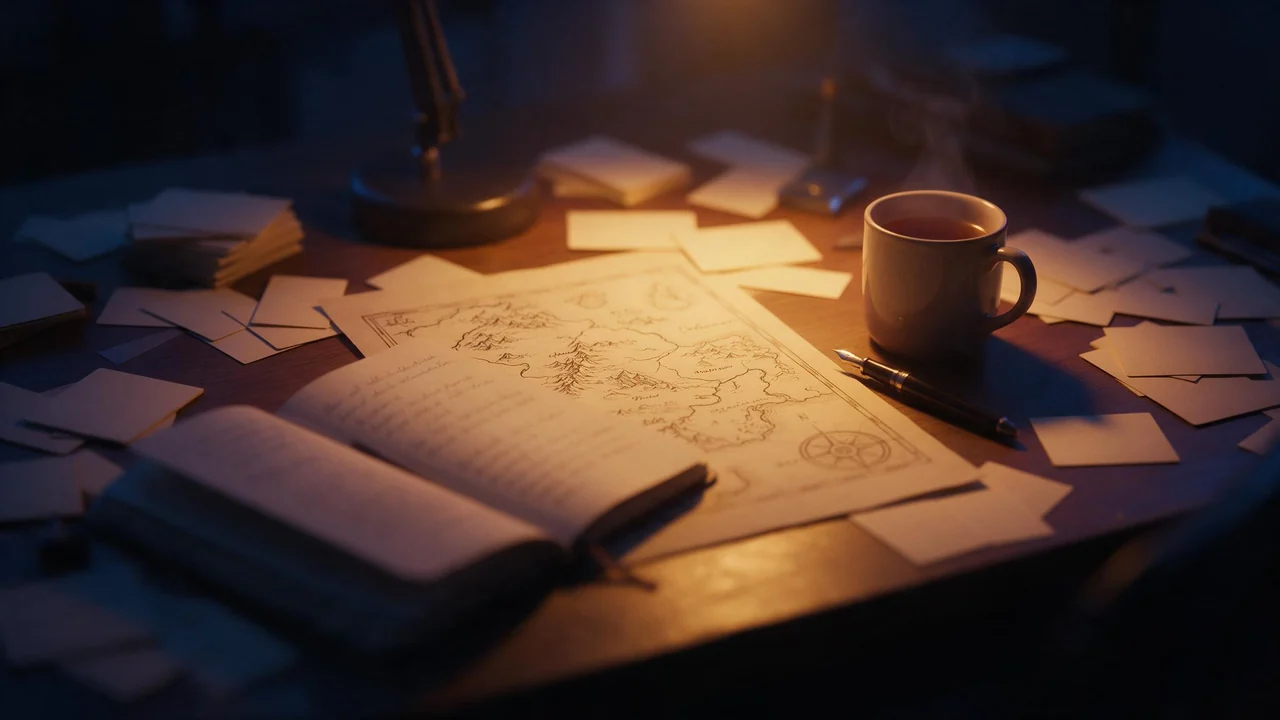
Players remember a scene better when they have seen it. If your story has a place you keep coming back to, the snowed-in platform or the forged map, make a picture of it in Fellowi Images and keep it next to the chat. It will not change what the companion remembers, but it will change what you do: you will write the room the way you see it, and the companion will have more to work with.
Questions this post answers
What should my first message say to start a roleplay with an AI companion?
Three things: who you both are in the story, where you are, and what just happened. One concrete event gives the companion something to react to, which works far better than asking it to invent a story from nothing.
Will my companion remember a long roleplay if I come back weeks later?
It sees the recent part of the chat word for word and a short summary of everything before it, so the broad shape of the story survives. Small details can drift, which is why a two-line recap at the start of a new session helps.
Can I step out of the story without ruining the roleplay?
Yes. A short note in brackets usually works and the companion goes back to the scene afterwards. If you sincerely ask whether it is an AI, it answers honestly and then eases back into character.
Keep reading
Keeping a Long Roleplay on Track: Recaps, Memory and When to Start a New Chat
Chapter forty, and the sword has a new name. It is not the companion being careless; it is how chat memory works. Here is what to do about it.

A Month With an AI Companion, Written Down Honestly
I expected to get bored in four days. What actually happened was stranger and more ordinary than either the enthusiasts or the critics describe.

Do My Companions Share What They Know About Me? Yes - the Memory Is Yours, Not Theirs
Tell one companion you moved to Lisbon and the next one knows too. Here is exactly what is shared, what stays in one chat, and the switch that turns it all off.