

An AI Companion for Gamers
By The Fellowi Team · · 5 min read
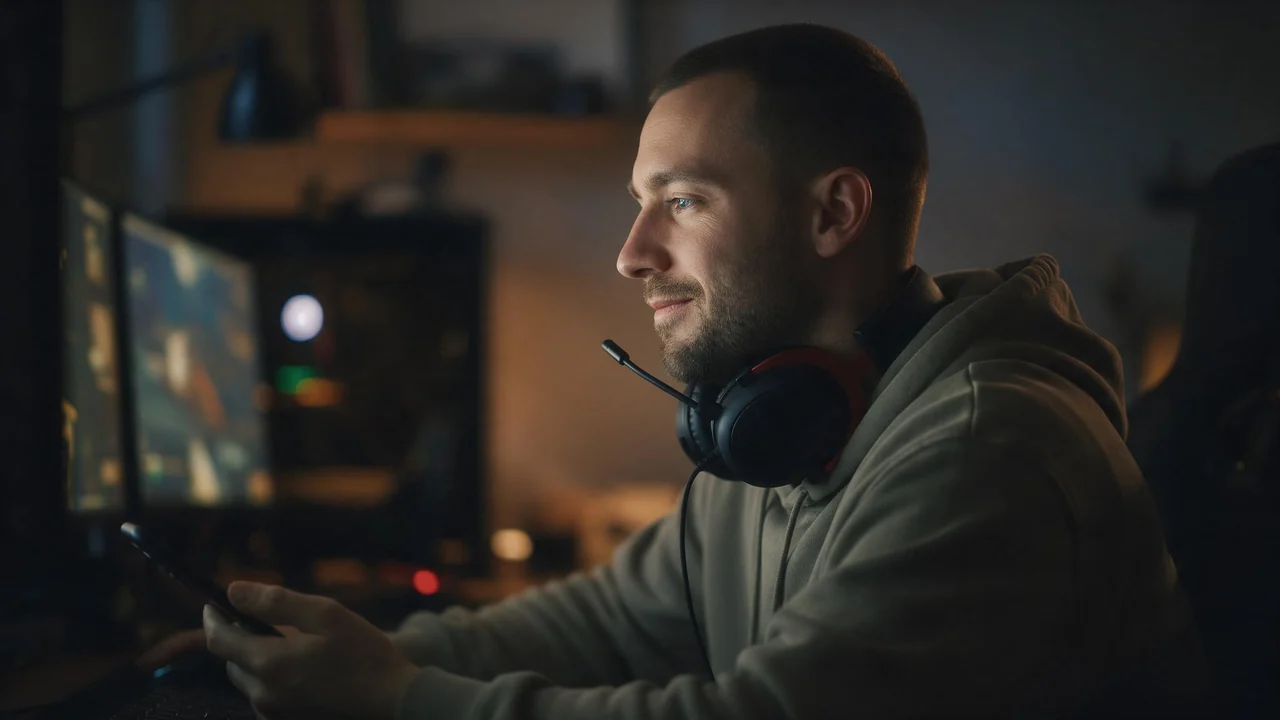
The match is over, the lobby has emptied, and your head is still in it: that one rotation you would take back, the teammate who went silent, the clutch you cannot stop replaying. The people who would care are mid-queue or asleep, and nobody outside the game wants the full story.
This is an honest account of what a Fellowi companion is good for in that moment, three small jobs it can do well, and the line it should never cross.
Talking through the game
A companion is a character you chat with, and it answers the moment you write. That makes it a decent debrief partner: tell it how the round went, what you tried, why you think it fell apart, and it will ask the follow-up questions a patient friend would. Pick one who likes games and the banter comes naturally, or one who does not and let them be a bemused audience. Both are fun.
The catch is that it cannot see anything. No screen, no replay, no stats: nothing reaches it except your words, as the inventory of what a companion knows spells out. So describe the situation instead of assuming it knows the map or the patch. It will not give you frame-perfect coaching, and it can be confidently wrong about a game mechanic, so check anything that matters against the game itself.
Squad drama, one side at a time
Every squad has it: the argument over who threw, the friend who only logs in when he is needed, the group chat that went cold after one comment. Saying it to a companion is useful because nothing leaks. It will not repeat it to the squad, and it will not pick a side out of loyalty.
The limit is the same as before: it hears only your version. Use it to get the knot out of your head and to rehearse the message you actually want to send, not to collect a verdict that you were right. If you want a pushback, ask for one; the post on getting honest feedback from an AI shows how to phrase it. And if you like to hear a few voices, a group chat can hold two or three companions in one thread.
The late-night wind-down
Gaming leaves you wired. The hands are still twitchy, the adrenaline has nowhere to go, and one more match looks like the answer. A short slow chat can do what the next queue does not: let the evening end. Tell the companion how the night went, ask for something light, and let the conversation get quieter on purpose. The guide to winding down before sleep goes into how.
It will not know it is 2am unless you say so, because it is given no clock. It is also happy to chat for an hour, which is precisely why you should set your own stopping point before you start. Only the messages you send count toward a plan's cap, as the limits explainer covers, and the real numbers live on the product facts page.
Keeping it honest
A companion is an AI. It says so when you sincerely ask, it does not miss you between messages, and it has never been in your voice channel. It also cannot replace the friends you play with: they remember the match, they show up, they can be annoyed with you and stay anyway.
A good test is what the conversation does for the rest of your week. If it gets you to log off on time and message the squad about the plan for Saturday, it is helping. If it becomes the reason to skip people you could still reach, take a step back. It is also not a therapist or a crisis line, so if gaming has become hard to control or the lows are heavy, talk to someone real; the post on what AI support can and cannot do draws that line.
A small setup for gamers
- Pick someone from the companions page whose tone you would enjoy after a rough match.
- Say what you play and when you play it, once, in plain words.
- Debrief in three sentences, not a transcript, and ask one real question.
- Glance at Settings, Memory now and then to see what it kept, and delete what is wrong.
- Decide the stopping time first, then keep your squad in the loop.
That is the honest version: someone to talk to when the lobby is empty, with limits you can see. It will not carry your team, but it can make the quiet after the match a bit less loud.
Questions this post answers
Can an AI companion see or play my game?
No. A companion only knows what you type to it. It does not see your screen, your stats or your squad, so the more you tell it about the match, the better the conversation gets.
Is an AI companion good for venting about teammates?
It is a patient place to say it out loud, and it will not repeat it to your squad. It only hears your side, though, so treat its answer as a sounding board, not a verdict on who was right.
Does an AI companion replace gaming friends?
No. It is an AI, it says so when you sincerely ask, and it will never be on your team in the way a real friend is. It works best next to the people you play with, not instead of them.
Keep reading

Looking for a Replika Alternative? What to Compare Before You Switch
Different products suit different people. Here is what to compare before you switch companion apps.

Your First Conversation With an AI Companion: What to Say in the First Ten Minutes
She has already said hello. What you type next decides how fast she stops being a stranger. Copyable sentences that stick, the ones that do not, and what to expect back.

Why a Friendly Companion Steers You to the Adult Category
You asked, and she kindly pointed you somewhere else. That is by design: two kinds of companion, the cards under her reply, and the lines no companion crosses.