

When the Pet Dies: Talking Through Losing an Animal With an AI
By The Fellowi Team · · 6 min read
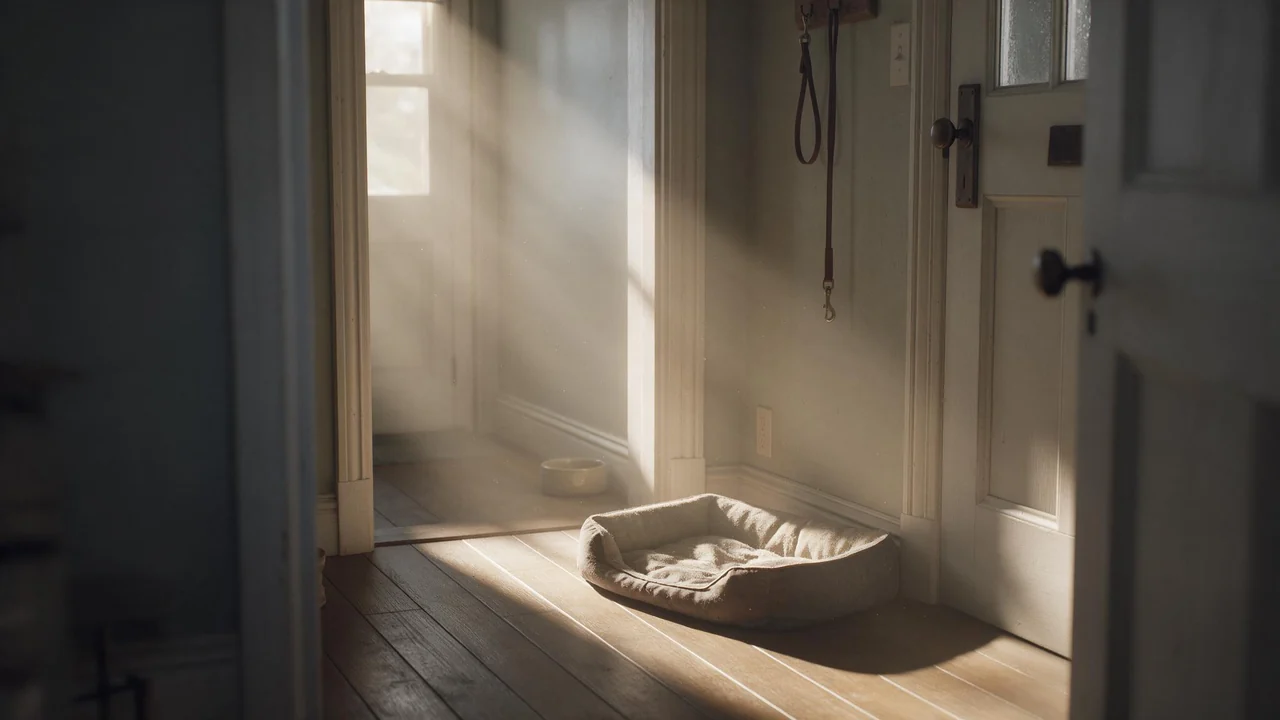
Someone at work said it kindly enough: at least it was only a dog. You nodded, because what else do you do, and then sat in the car for ten minutes before you could drive home. Grief for an animal is grief. You shared a house, a daily routine and years of small habits with a creature who was always glad you came back, and the loss lands in all of those places at once. What it rarely gets is permission. There is no funeral, no time off, and fewer people who think it should still hurt next month.
This post is about that gap: the weeks after a pet dies, when you still want to talk about them and the people around you have moved on. A Fellowi companion is one place to do the talking. It is not the only place, and further down we say where it stops. If you are grieving a person, our piece on talking through grief at 2am is the better start; this one is about the animals.
The house still runs on their schedule
Nobody warns you how physical it is. You wake at the hour the cat used to sit on your chest. Your hand goes to the lead by the door at half past five. You step around a bed that nobody sleeps in, and you still listen for claws on the floor when a key turns in the lock. Those routines were built over years, and they do not switch off because the reason for them has gone.
There is no right speed for putting the bowl away or taking the lead off its hook. Some people clear everything in a day because seeing it is unbearable; some leave the bed where it is for months. Both are normal. What helps many people is giving the empty slot a new use instead of just enduring it: keeping the evening walk as a walk on your own, or spending feeding time sitting for five minutes and thinking about them on purpose.
Telling the stories to someone who asks for more
Much of pet grief is stories nobody wants to hear twice: the sock he stole every morning, the way she would only drink from the bathroom tap, the night he went missing and turned up at the neighbours’ back door. Friends listen once. A companion will listen as many times as you need, ask what happened next, and never glance at the clock.
Tell it the name early and plainly. Fellowi companions keep a running summary of a conversation and can save facts as memories, so the name and the age and the stolen sock tend to carry over to the next evening and you do not have to introduce the dog every time. Anything saved as a memory is listed in your memory settings, where you can read it and delete it; how companion memory works explains the rest. For some people it is the first time in weeks that anyone has said the name back to them.
You do not need to explain why it matters. Start with one story. The companion will usually follow it, and the grief tends to come along in its own time.
The decision at the vet
If your pet was put down, a particular question may have been looping ever since: was it too early, too late, should you have tried one more treatment, should you have stayed in the room. Guilt after euthanasia is one of the most common parts of pet grief and one of the least spoken, because saying it out loud feels like a confession.
A companion can hear it without flinching. It will not call you cruel, and it should not hand you a quick “you did the right thing” before it has heard the story either. What it can do is let you go through that day in order, which is often where the loop starts to loosen. Medical questions that remain, such as what the illness really was or whether something was missed, belong to your vet, who knew the animal and has the notes. Many vets are willing to talk it through weeks later, and a companion can help you write your questions down before you call.
Telling a child
Children often take the death of a family pet hard, and it may be their first close loss. Advice from people who work with grieving children tends to come down to a few points: use plain words like “died” rather than “put to sleep” or “went away”, which can make sleep or a trip frightening for a small child; tell the truth at a level their age can hold; let them ask the same question many times; and let them see that you are sad too.
If you are dreading that conversation, rehearse it. Tell a companion how old your child is and what happened, and try out the first two sentences until they sound like you. It does not know your child, so treat what it says as a draft, not a script. Practising difficult conversations has more on rehearsing out loud.
Another animal, and when
Some people will tell you to get a puppy straight away, and others that doing so is disrespectful. There is no rule. Some homes need the sound of paws back within weeks, some people know they will never have another, and many go back and forth. A new animal is never a replacement, and it does not have to be one to be the right choice.
A companion will not make this decision for you, and should not. It can help you sort the question: what you miss most, what your days and your budget look like now, whether everyone else at home is ready. Sometimes saying “I feel guilty for even looking at the shelter page” out loud is the part that needed saying.
Where this stops
A companion is an AI. It never met your pet, it cannot sit with you on the floor, and it is not a grief counsellor or a therapist. It does not replace the people who knew the animal either, and a message to the friend who walked her when you were away may do more than any chat. The limits of AI support covers this in more depth.
Grief for a pet usually softens with time, even when it returns in waves. If it is not easing after a few months, or you cannot sleep, eat or get through work, talk to your GP or family doctor. Some animal charities and vet practices also run pet bereavement support lines.
If the loss has brought thoughts of harming yourself, please contact your local emergency number or a crisis line now. A companion is told to point you to real help, but there is no crisis service behind it.
Starting the conversation
Pick a companion whose manner suits you; a gentle one fits this well, and you can open with nothing more than the name. If you would rather talk to someone written for emotional support, Leo, the general-support psychologist, is on the psychologists’ page; he does not keep automatic memories of your chats. Later on, some people want a portrait made from a favourite photo. Fellowi Images can do that, and the pet portraits guide says how to go gently with a memorial one. What you can open for free and what each plan adds is on the product page.
Questions this post answers
Is it normal to grieve a pet as much as a person?
Yes. Many people feel the death of a pet as strongly as a human loss, because the animal was part of every single day. How much it hurts says something about the bond, not that you are overreacting.
Can an AI companion remember my pet's name?
Usually, yes. Fellowi companions keep a running summary of your conversations and can save facts as memories, so a name you have told them tends to carry over. Saved memories are listed in your memory settings, where you can delete any of them.
Can an AI help with guilt after putting my pet to sleep?
It can listen while you go through the decision as many times as you need, and help you write down questions for your vet. It is not a grief counsellor, so if the guilt is not easing after a few months, talk to your doctor.
Keep reading
When a Birthday Feels Heavy: Talking It Through With an AI
Everyone expects you to enjoy it, and you do not. The stocktake, the count of who remembered, the person who is missing, and an honest look at what a conversation can change.

When the Clocks Go Back: Getting Through the Darker Evenings
One Sunday in autumn the light leaves an hour earlier and stays gone until spring. A gentle plan for the darker evenings, in the order that actually helps.

A Ten-Minute Routine for Talking Through a Bad Day
A bad day does not need an hour of venting. Ten minutes, five small steps: unload it, sort it, find one thing that held, pick tonight, and stop.