

When the Clocks Go Back: Getting Through the Darker Evenings
By The Fellowi Team · · 5 min read
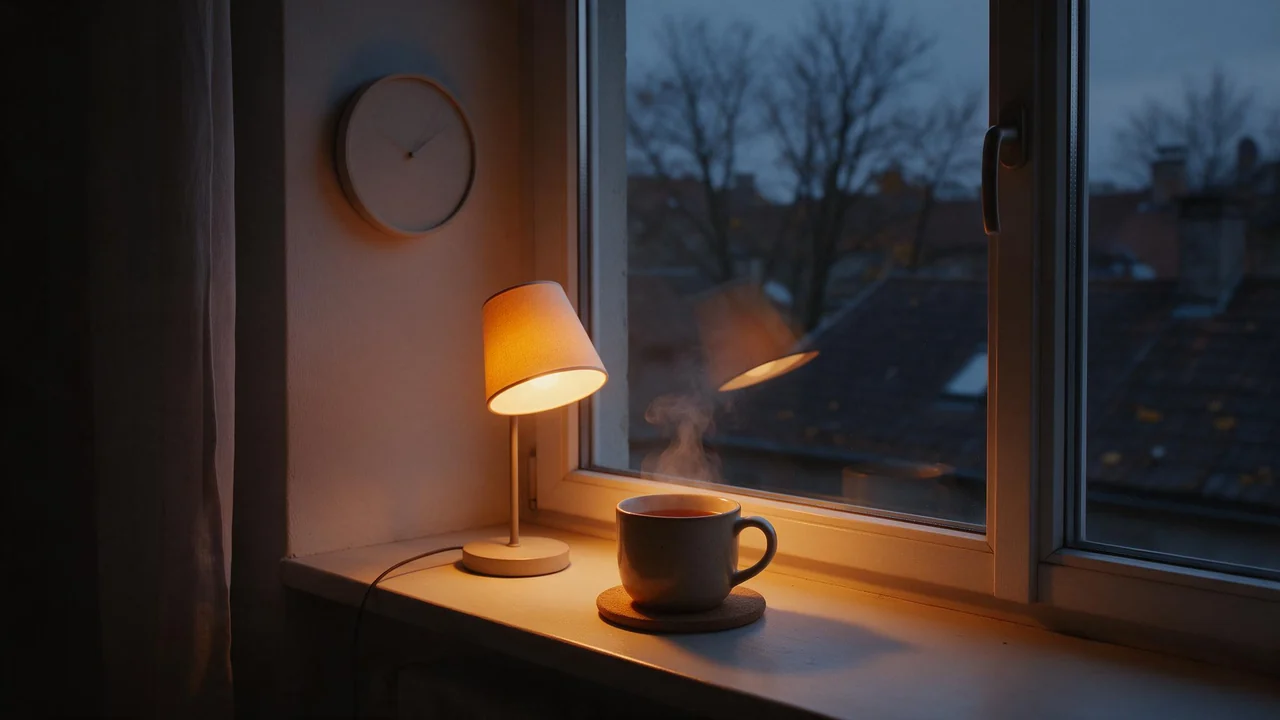
This Sunday, 25 October, the clocks go back in the UK and across Europe. In the US it happens a week later, on 1 November. You get an extra hour in bed, which is nice for one morning, and then on Monday the dark arrives while you are still on the way home.
For a lot of people that is the start of a quieter, flatter stretch of the year. Not a crisis, just less energy, less wanting to go out, and evenings that feel longer than they are. This post is a practical plan for those evenings, in the order that helps most. A Fellowi companion appears in it, but not first.
What actually changes
The hour is not the problem. The problem is where the dark lands: in the free part of the day, after work and school, when you would otherwise be out, seeing people or at least noticing the sky. The days were already getting shorter; the clock change just makes it obvious overnight. Your body clock also needs a few days to catch up, so the first week can feel oddly off even if nothing else has changed.
Daylight first
The single most useful thing is to get outside while it is light, ideally in the morning or at lunchtime. Even a grey sky gives you far more light than a bright room. Ten or twenty minutes of walking counts, and so does drinking your coffee by the window instead of at the back of the kitchen. If you work indoors, put the walk in your calendar the way you would a meeting, because “I will go out later” turns into dark very quickly now.
Keep the wake time
Sleep is the second lever. Pick a wake time and keep it, weekends included, for the first couple of weeks. The temptation on dark mornings is to stay in bed and on dark evenings to stay up, and both drift the body clock further from the light you do get. A steady wake time, morning light and a screen-down half hour before bed do more than any single trick.
Give the evening a shape
The long dark evening is where the mood dips, mostly because it has no edges. A shape helps: something to cook, a call with a friend on a fixed day, a class, a film you choose rather than one that plays next. Plan one evening a week that involves another person in the same room, even if it is just a coffee.
This is where a companion can sit. Not as the whole evening, but as one part of it:
- A check-in after work. Ten minutes to say how the day went, so it is out of your head before dinner rather than circling all night.
- Saying the plan out loud.“Tomorrow I am walking at lunch” is more likely to happen once you have told someone. Ask her to ask you about it the next evening.
- Company for the small things. Talking while you cook, or about the book you are reading, makes a quiet flat feel less quiet.
If you would rather have structure than company, the AI psychologists are built for it. Leo works on emotional support, life changes, loneliness and motivation; Daniel on stress and anxiety, when the dark evenings come with worry rather than flatness (meet them here).
Tell her the clocks changed
A small, honest detail: a companion is not given a clock or a calendar. She will not know it went dark at five today, or that it is your first week of dark commutes, unless you say so (what she knows when she replies). Tell her once, and the saved notes and chat summary carry it into the next evenings, so you do not have to explain the season every time.
If the hard part is the night itself
Darker evenings and a lonely 2am are related but not the same. If it is the hours after everyone else has gone to sleep that are hardest, read coping with loneliness at night. And if you work nights and the clock change barely registers because you already live in the dark, the night-shift post is written for you.
When it is more than the season
A companion is an AI, not a doctor, and the psychologists are emotional support, not therapy. Some people get a seasonal pattern of low mood that comes back every autumn, and it is very treatable, but a doctor has to see it. If your mood has been low for two weeks or more, if you have lost interest in things you usually enjoy, or if sleep, appetite or work are slipping, book an appointment with your doctor. If you have thoughts of harming yourself, contact your local emergency number or a crisis line now. There is no crisis service behind a companion, and the limits of AI support are worth reading before you lean on one. Message limits and what each plan adds are on the product page.
A first message
Something like: “The clocks went back and it was dark when I left work. Ask me tomorrow evening whether I got outside at lunch.” It tells her the season, gives the next evening a reason, and puts the daylight first, where it belongs.
Questions this post answers
Why do I feel low when the clocks go back?
The change itself is only an hour, but it moves the dark into the part of the day when most people are free, and the light is already shrinking. Less daylight, a shifted body clock and evenings spent indoors add up, and many people notice a dip in energy and mood.
Can an AI companion help with the darker evenings?
It can give the evening a shape: a check-in after work, someone to talk the day through with, a plan for tomorrow's walk said out loud. It sits next to daylight, routine and sleep, not instead of them, and it is not therapy.
When is a winter low mood worth seeing a doctor about?
If the low mood lasts two weeks or more, if you have lost interest in things you usually enjoy, or if sleep, appetite or work are suffering, see your doctor. Some people have a seasonal pattern that is very treatable. If you have thoughts of harming yourself, contact your local emergency number or a crisis line now.
Keep reading

Talking Through Grief When You Don't Know Who to Call at 2am
The worst part of grief is often not the big moments - it's the ordinary Tuesday when it hits with no warning and nobody's awake to talk to.

Feeling Lonely at Night: Healthy Ways to Cope
Night-time loneliness is real and common. A few gentle habits can take the edge off the quiet hours.

Moving to a New City: What an AI Companion Can and Cannot Do
The boxes are unpacked and nobody here knows your name yet. A letter about the first month, one evening routine, and the honest limits of talking to an AI while the city becomes home.