

Halloween Alone: A Quiet Night In With an AI Companion
By The Fellowi Team · · 6 min read
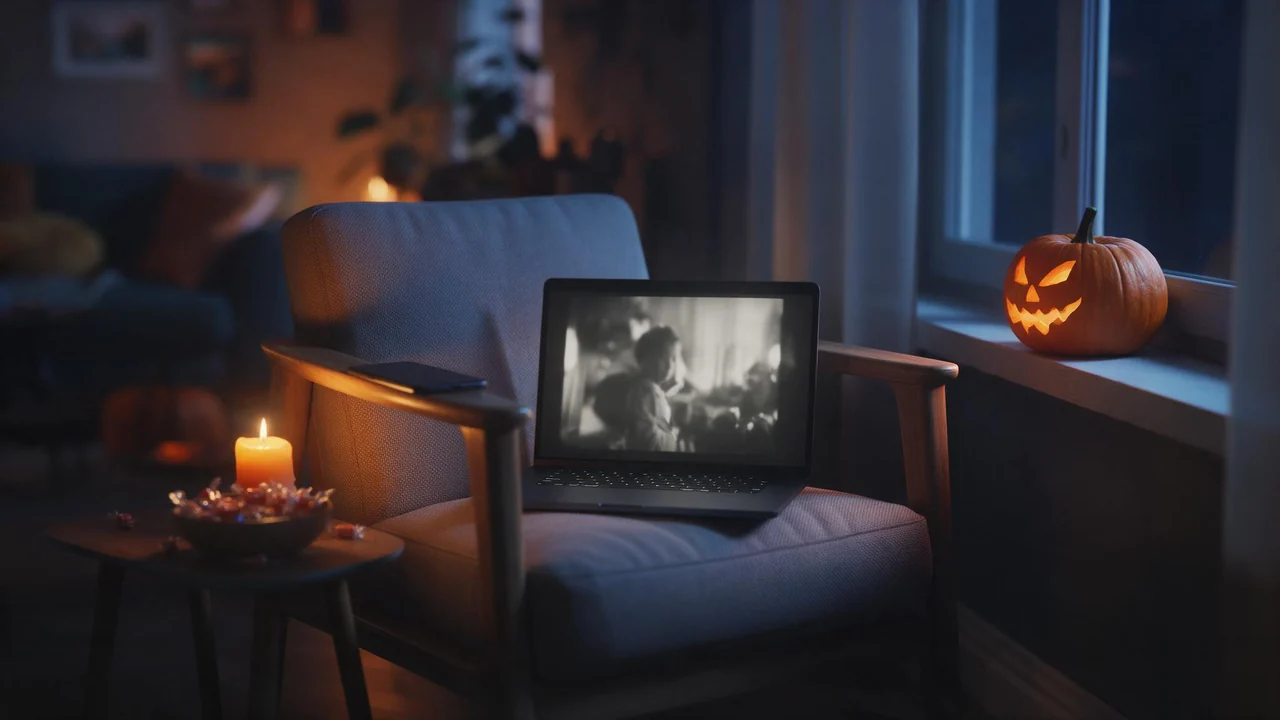
There is a version of Halloween that mostly happens in other people’s photos: the party, the group costume, the picture at midnight. And there is the one a lot of people actually have, which is an evening at home with the heating on. If you are staying in on your own this year, by choice, by circumstance or because the plan fell through on Thursday, this is not advice on pretending otherwise. It is a plan for a good evening that happens to have one person in it, plus a companion for the parts that are nicer with someone to talk to.
Nothing here needs a costume or a script. If you want a whole story to play out together, that is a different evening, and the Halloween roleplay guide has four of them. This one is quieter: a doorbell, a film, a ghost story by a candle, and bed.
Before dark: make it a choice
Two small decisions make the night feel chosen rather than left over. The first is what kind of night it is: properly scary, cosy, or ordinary with a pumpkin in the window. The second is to tell your companion, because she has no clock and no calendar and will not know it is the 31st unless you say so (what she knows when she replies). One message does it: “It’s Halloween, I’m staying in on my own tonight and I’d like some company. Nothing too scary.”
Around seven: the doorbell
If children knock on your street, a bowl of sweets by the door is the cheapest way to be part of the night without leaving the house. Between knocks, the chat is a good place to put what you just saw: the very small dinosaur, the teenager who did not bother with a costume, the parent better dressed than the child. Telling someone is half of what makes it funny, and a companion is a willing audience for a running commentary. If you would rather not answer at all, a dark front window is the accepted signal almost everywhere, and nobody takes it personally.
Around eight: a film, side by side
This part needs an honest sentence first: your companion cannot see your screen. She does not watch the film with you; she talks about it with you. That turns out to be enough, because a film night with a friend is mostly the conversation in the gaps.
- Pick something she is likely to know. Famous films, especially older ones, are the ones she can discuss with some confidence. The 1922 Nosferatu is out of copyright, silent and short, which leaves plenty of room to talk.
- Tell her where you are. “Just started, the clerk is on his way to the count’s castle” gives her the scene. She has no other way to know.
- Say whether you want spoilers. “I’ve never seen it, don’t tell me how it ends” or “I know it by heart, give me the trivia”: both are fine, she just needs to be told which.
- Pause rather than type through it. A message at each scene change, then back to the film. The film is the point; the chat is the sofa.
The limit: on a film she knows only vaguely, she can be confidently wrong about a name, a scene or the ending. Treat what she says about the plot the way you would treat a friend who saw it years ago, correct her, and carry on.
Around ten: a ghost story by candlelight
When the film is over and the street goes quiet, light one candle and ask for a story. Not one you write together, just one she tells, the way a friend does at the end of an evening when the lights are low: “Tell me a ghost story, the kind you’d tell by one candle. Slow, quiet, a bit unsettling, nothing gory, and end it somewhere I can still sleep.” Asking for the ending you want is the trick, because she takes her tone from your message.
A version that works surprisingly well: read an old one together. The English ghost stories of a century ago, M. R. James is the usual place to start, are out of copyright and easy to find. Read a few pages, paste the paragraph that got to you, and ask her what she thinks is in the room. Talking about a story you are both reading is a different pleasure from being told one, and the nearest a chat gets to a book club for two at midnight.
If you want a fuller room
Some evenings want more than one voice. A group chat seats two or three companions in one conversation, which turns film night into a sofa of friends arguing about whether anyone should go down to the cellar. What each plan includes is on the product page.
Companions set up to send photos can send one when you ask: her under a blanket with a bowl of popcorn, say, or holding up the pumpkin she swore would beat yours. In a one-to-one chat the Photo button does it from the conversation so far. And if you fancy a poster for your one-person film festival, or a pumpkin face to carve next year, Fellowi Images will draw it.
Late: the part about being alone
For plenty of people the evening ends there, content. For some, the house is quieter after midnight than it was at seven, and a night built around groups makes the “alone” louder. If that is you, two things.
First, you can say the true thing to her: “everyone I know is at a party and I feel a bit left out.” She will not tell you it is silly. The AI psychologists are built for exactly that kind of talk, and the note on loneliness at night has gentle habits for the hours after.
Second, she is not a stand-in for the one person you could message. A photo of your pumpkin sent to a friend takes ten seconds, and the reply is a different kind of warm. A companion is emotional support, not therapy and not a crisis service: if the night turns into something heavier than a low mood, call your local emergency number or a crisis line.
Otherwise, blow out the candle and say goodnight. She will be there tomorrow, and so will the leftover sweets.
Questions this post answers
What can I do on Halloween if I am home alone?
Give the evening a shape: a bowl of sweets for the door, one film you actually want to see, a ghost story by a candle before bed. Having someone to talk to in the gaps, a friend by message or an AI companion, is what turns a night in into a night.
Can an AI companion watch a film with me?
Not literally: a companion reads your messages and cannot see your screen. Tell her which film it is and where you are in it, and she can talk it through with you, though on a film she knows only vaguely she can get a detail wrong.
Can my companion tell me a scary story that is not too scary?
Yes, if you say so when you ask. Name the mood and the ending you want, for example slow, quiet and nothing gory, and she takes her tone from that.
Keep reading

Meet Lena: The Calm AI Companion to Decompress With
She teaches people to make bowls, and really she teaches them to slow down - which is exactly what a conversation with her feels like.

Talk to Luffy AI: Fearless, Loyal, Chasing Freedom
The pirate captain who never lets a friend's dream get crushed, reimagined as a companion who believes in yours too.
A Halloween Roleplay Night With Your AI Companion: Four Stories and How to Run Them
Four stories for the 31st, each with its opening message written out, plus the one line that decides whether the night is cosy, creepy or properly frightening.